

 Back to Table of Contents

.jpg)
 Inquire Now
Need Support?
Please provide your question. We’ll find you with the best support options.

ISK Bearings | B2B Bearing Procurement
Overview | Complete Guide to Needle Roller Bearings
Needle Roller Bearings are specialized bearings that use long, slender cylindrical needle rollers as rolling elements. Compared with Ball Bearings, needle roller bearings have a smaller cross-sectional height while carrying 2 to 8 times higher radial loads. They are therefore widely used in industrial applications where space is limited but load requirements are high. This article covers the fundamentals of needle roller bearings, compares them with ball bearings, explains each major series, shows how to read specification tables, and provides dimension-table references to help you move from understanding to specification confirmation in one place.
.jpg)
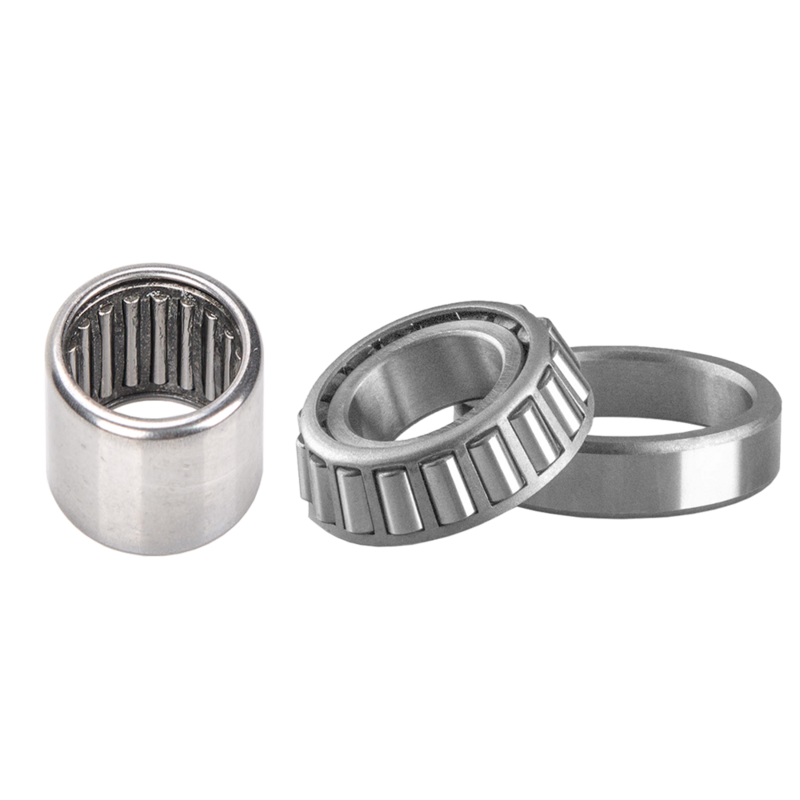
Needle Roller Bearings and Ball Bearings are both rolling bearings and share the same basic construction: an inner ring and outer ring, rolling elements (balls or needle rollers), and a cage. Several rolling elements are arranged between the opposing raceways, while the cage prevents contact between rolling elements and maintains proper spacing during rolling motion.
Compared with plain bearings, rolling bearings, including needle roller and ball bearings, share the following characteristics:
- Low starting friction coefficient, with little difference from the dynamic friction coefficient.
- Internationally unified standards and specifications make interchangeable products easy to obtain.
- Easy lubrication with relatively low grease consumption.
- A single bearing can support both radial and axial loads.
- Easier to use in high-temperature or low-temperature environments.
- Bearing rigidity can be increased through preload.
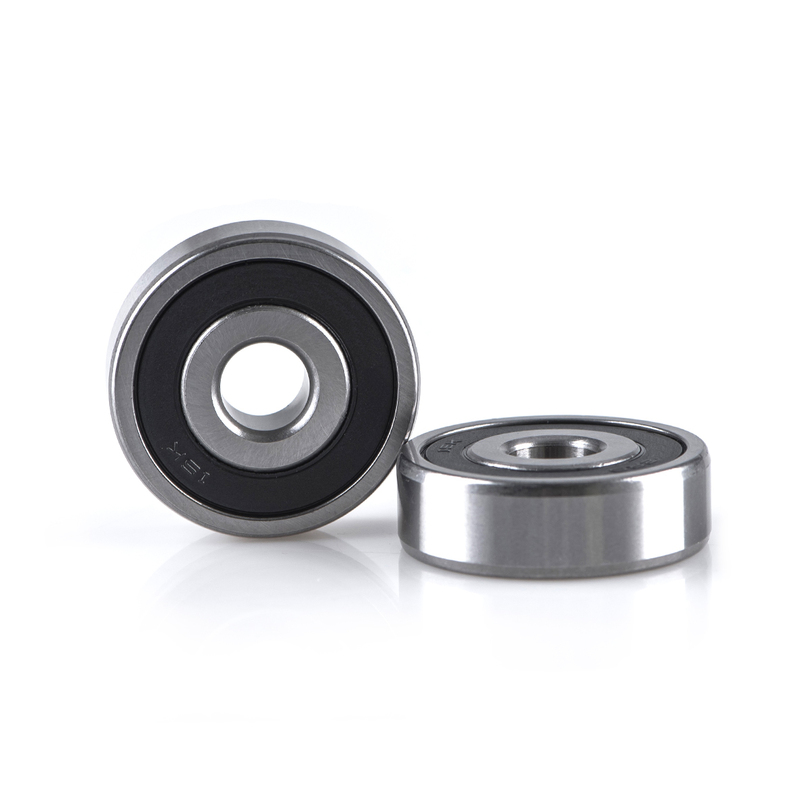
Ball Bearings are among the most common bearing types and are widely used in industrial, mechanical, and automation equipment. They support rotating shafts, wheels, and other rotating components, reducing friction and helping mechanical systems run smoothly.
Their structure uses balls to maintain clearance between the inner and outer rings. Ball motion reduces friction compared with sliding contact between flat surfaces. Because balls and raceways make point contact, the contact area is small, so ball bearings generally have lower load-carrying capacity than some other bearing types. However, they can tolerate a degree of misalignment between the inner and outer rings and, with low friction resistance and low axial runout, are suitable for high-speed, high-precision, low-torque, and low-vibration applications.
Common ball bearing types include:Deep Groove Ball Bearings (the most common type, capable of supporting radial loads and axial loads in both directions), Thrust Ball Bearings、self-aligning ball bearings, and angular contact ball bearings.
Note that the balls in a ball bearing may deform after extended use. If the outer ring is subjected to excessive pressure, damage may eventually occur. Rated loads and other parameters should therefore be checked regularly to ensure continued smooth operation.
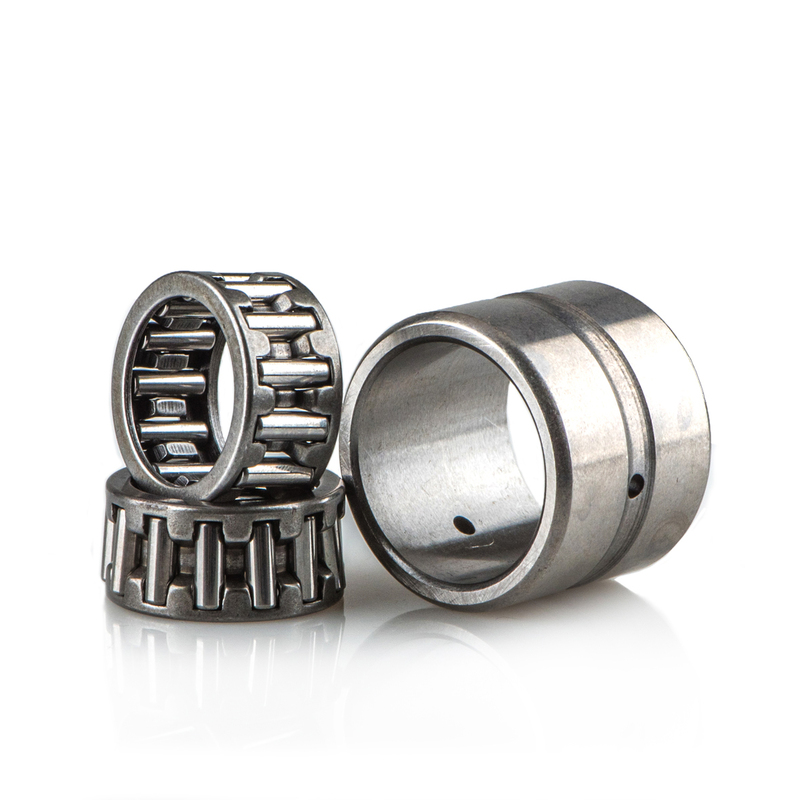
Needle Roller Bearings are a special type of rolling bearing that uses long, slender cylindrical needle rollers. Compared with Ball Bearings and ordinary Roller Bearings, needle roller bearings have a larger contact area with the inner and outer rings (line contact), allowing them to support higher loads. This unique design plays an essential role in many industrial fields because it enables high load capacity in limited radial space, making needle roller bearings important components in automotive, machinery, heavy equipment, and related industries.
Needle Roller Bearings are roller bearings with a high length-to-diameter ratio.Roller Bearings. Compared with general roller bearings, needle roller bearings use rollers with a smaller diameter and greater length. For the same shaft diameter, they can support loads 2 to 8 times higher than Ball Bearings or cylindrical roller bearings while fitting into a smaller space.
Because needle roller bearings generate lower inertia forces, they are suitable for oscillating movement and may also replace plain bearings in lightweight, compact mechanical designs.
| Needle Roller Bearings | Ball Bearings | |
|---|---|---|
| Contact Type | Line contact (long needle-shaped rolling elements) | Point contact (spherical rolling elements) |
| cross-sectional height | Very small, requiring minimal radial space | Relatively larger |
| Radial Load Capacity | High (2 to 8 times that of ball bearings for the same shaft diameter) | Relatively lower |
| Suitable Speed Range | Medium- to low-speed applications | Suitable for high-speed, high-precision applications |
| Typical Applications | Applications with limited space and high radial loads (automotive systems, compressors, heavy equipment) | High-speed rotation, low torque, and low-vibration applications (motors, precision instruments) |
The high load-carrying capacity and excellent radial load characteristics of needle roller bearings make them indispensable in demanding processes such as automotive systems, machinery, heavy equipment, metalworking, and metallurgy.
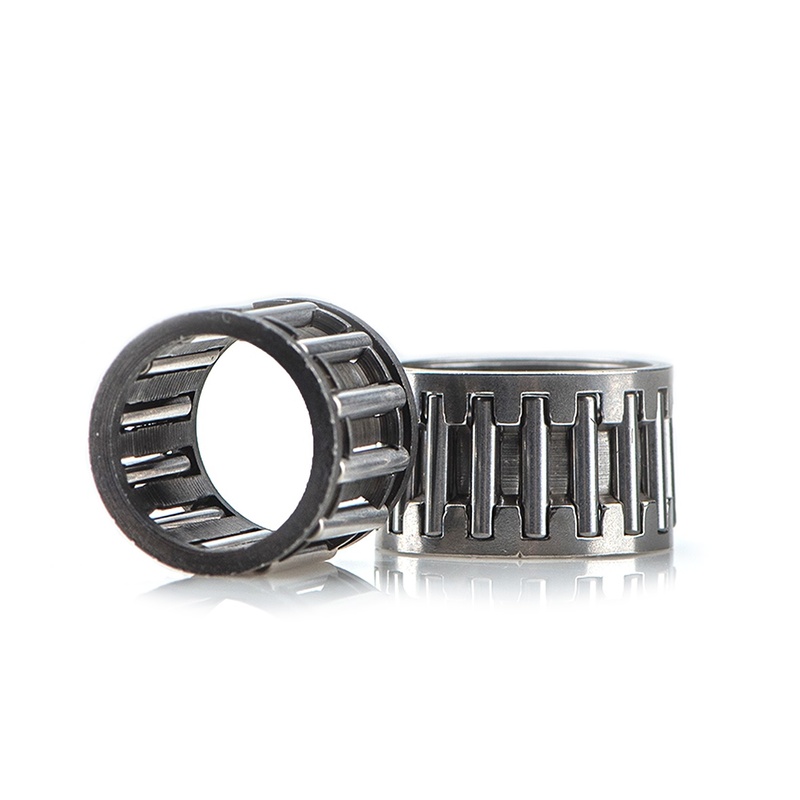
Needle roller and cage assemblies are a major form of needle roller bearing. They include needle rollers and a mechanical cage that supports them. In compact designs, the shaft and bearing housing can directly serve as raceways, eliminating the need for separate inner and outer rings.
Needle roller bearings are especially suitable for the following conditions:
In addition, the smaller rotating radius gives needle roller bearings lower rotational torque. Even under the same friction force, this improves mechanical efficiency and supports lightweight, compact, and precision-oriented design requirements.
Needle Roller BearingsBy load direction, needle roller bearings can be classified into radial bearings and thrust bearings. Radial types include drawn cup designs, solid ring designs, and special-purpose one-way designs. The following is an overview of the main series offered by ISK BEARINGS:
| Series | Type Name | Main Features |
|---|---|---|
| TA Series | Drawn Cup Needle Roller Bearings | Thin-walled outer ring, suitable for compact installations requiring low cross-sectional height |
| HK/SCE Series | Drawn Cup Needle Roller Bearings | Precision drawn outer ring with high load capacity in small radial dimensions |
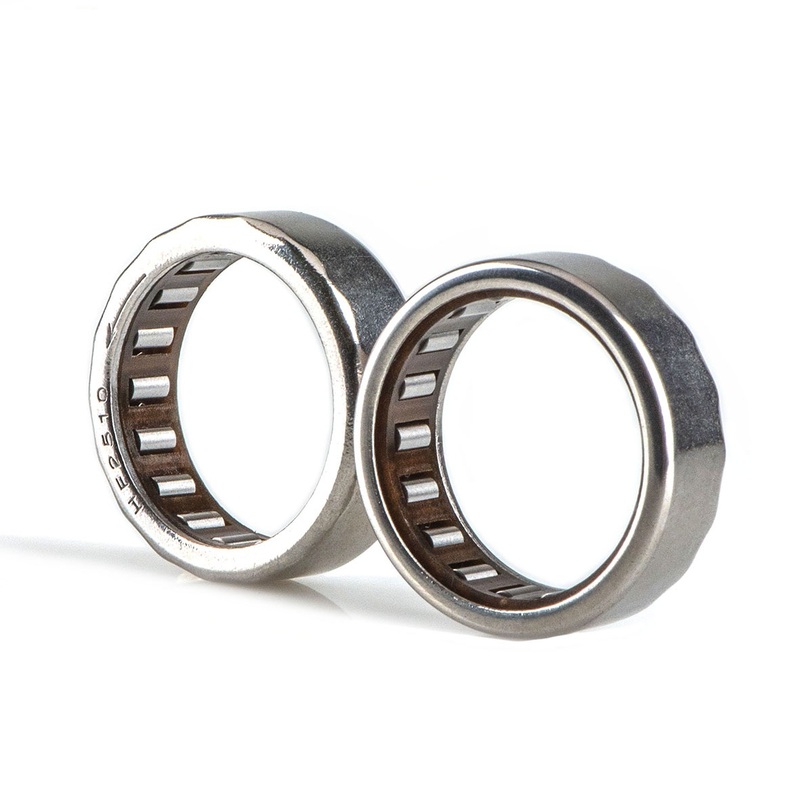
| HF Series | One-Way Clutch Needle Roller Bearings | Allows rotation in only one direction; used in indexing and backstopping mechanisms |
| NK Series | Machined Needle Roller Bearings without Inner Ring | Compact structure with high radial load capacity; shaft serves as raceway |
| NA Series | Machined Needle Roller Bearings with Inner Ring | High rigidity with inner ring; suitable for high-load applications |
| RNA Series | Machined Needle Roller Bearings without Inner Ring | Uses the shaft as the raceway for an even more compact radial design |
| AXK Series | Thrust Needle Roller Bearings | Supports axial loads with minimal axial space |
| KT Series | Cage and Needle Roller Assemblies | Lightweight and compact; suitable for high-speed operation |
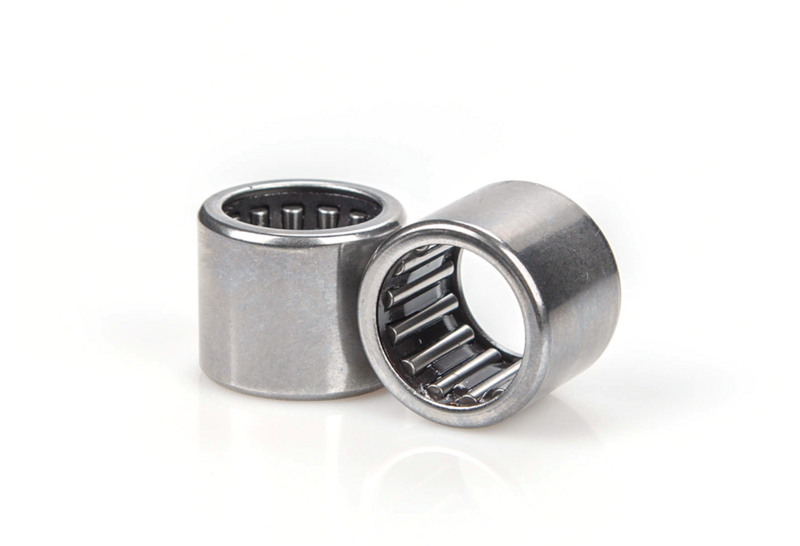
TA Series drawn cup needle roller bearings consist of a thin-walled drawn outer ring, a cage, and a set of needle rollers. They are usually precision-formed from thin steel plate, offering very small cross-sectional height and high load capacity. They are suitable for low-cost, high-volume production applications.
The outer ring and bearing use a static fit, so no axial fixing device is required. Even under high-speed loaded conditions, the bearing can maintain its original function. Because of the large grease storage volume, long-term operation without grease replenishment is possible.
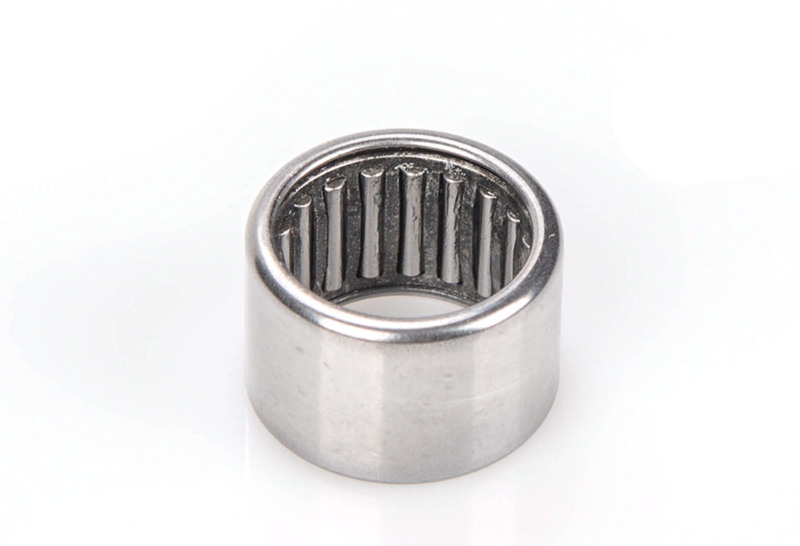
Like the TA Series, the HK/SCE Series uses a drawn cup design consisting of a thin-walled drawn outer ring, a cage, and a set of needle rollers. The outer ring and bearing use a static fit and require no axial fixing device. Even under high-speed and heavy-load conditions, the bearing maintains its original function; the large grease storage volume also enables long-term operation without grease replenishment.
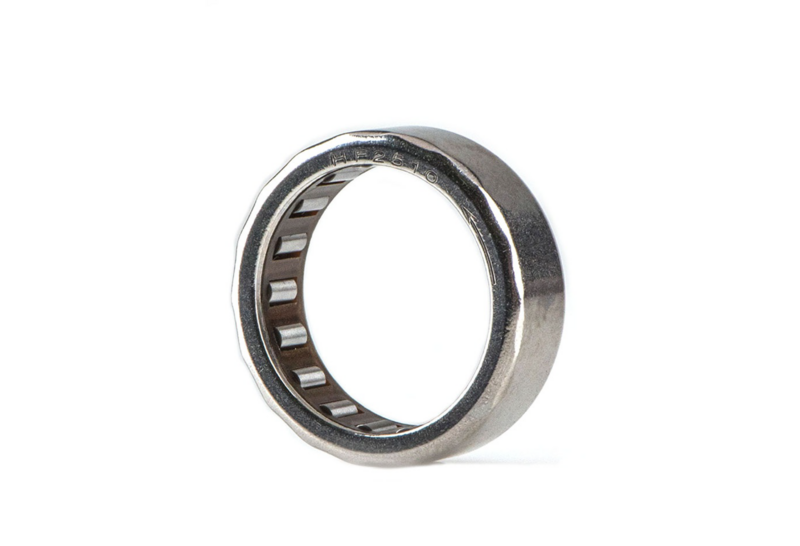
The HF Series is a one-way drawn cup needle roller clutch bearing. It allows rotation in one direction and blocks reverse motion, making it suitable for conveyor systems, indexing mechanisms, and packaging equipment requiring backstopping or overrunning clutch functions.
The HF Series consists of a thin-walled alloy steel outer ring and a plastic cage. The inner surface of the outer ring securely holds the needle rollers. Metal springs are installed in the plastic cage, with each needle roller supported by an independent spring, giving the bearing high switching frequency and positioning accuracy. Special heat treatment greatly improves wear resistance and load capacity, while the slim design provides low operating torque.
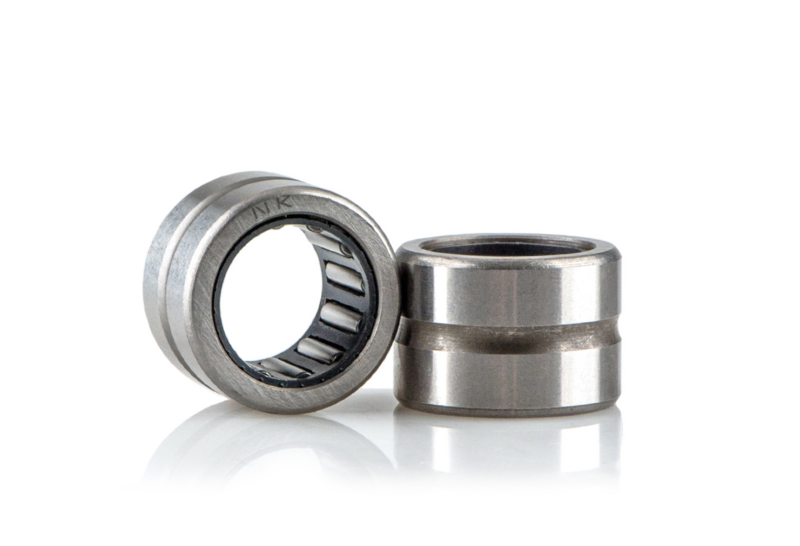
The NK Series is a solid-ring needle roller bearing with a compact structure, small radial dimensions, and high radial load capacity. Except for full-complement needle roller bearings, the series uses high-rigidity cages that correctly guide needle rollers parallel to the shaft axis. Shaft machining accuracy directly improves the overall rotational accuracy of the bearing.
The NK Series includes versions without an inner ring, where the shaft serves as the raceway for a more compact design, as well as versions with an inner ring. Metric and inch specifications are available, with cage type, full-complement needle type, and sealed type structures. They are suitable for automotive parts such as crankshafts and cam followers, as well as high-speed applications.
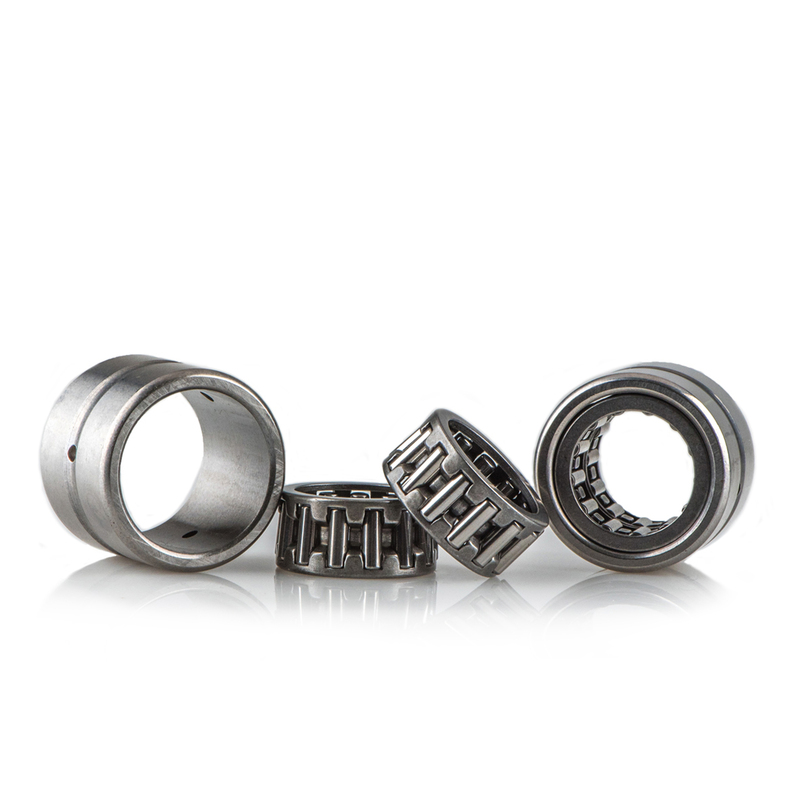
The NA and RNA Series are both solid-ring needle roller bearings with small cross-sectional height and high load capacity. Because the outer ring has high hardness, these bearings can operate properly even with lightweight alloy bearing housings. Both series are available in metric and inch specifications, with cage type, full-complement needle type, and sealed type structures.
The difference is as follows:The NA Series includes an inner ring, making it suitable for applications requiring higher rigidity and precision; the RNA Series has no inner ring, using the shaft directly as the rolling surface for a smaller size under the same space constraints. It is commonly used in textile machinery, printing presses, packaging equipment, and similar applications.
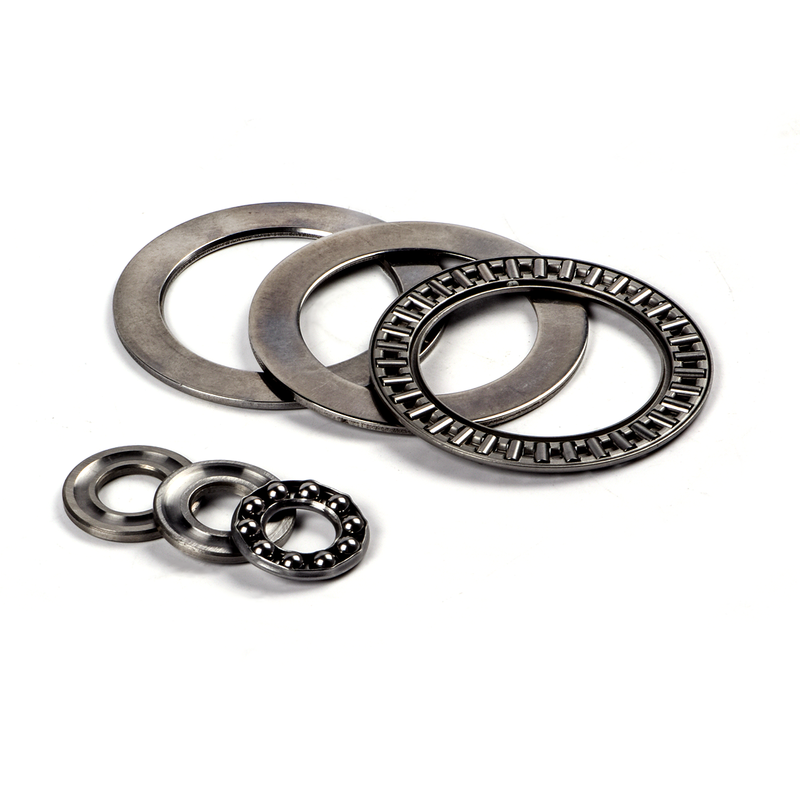
AXK Series thrust needle roller bearings are composed of a ring washer and cage assembly. They can accommodate many needle rollers with minimal variation between rollers. The design supports axial loads, provides high rigidity, and minimizes axial space requirements. It is suitable for applications requiring high rigidity and very small axial space, such as automotive transmissions, agricultural machinery, and heavy industrial equipment.
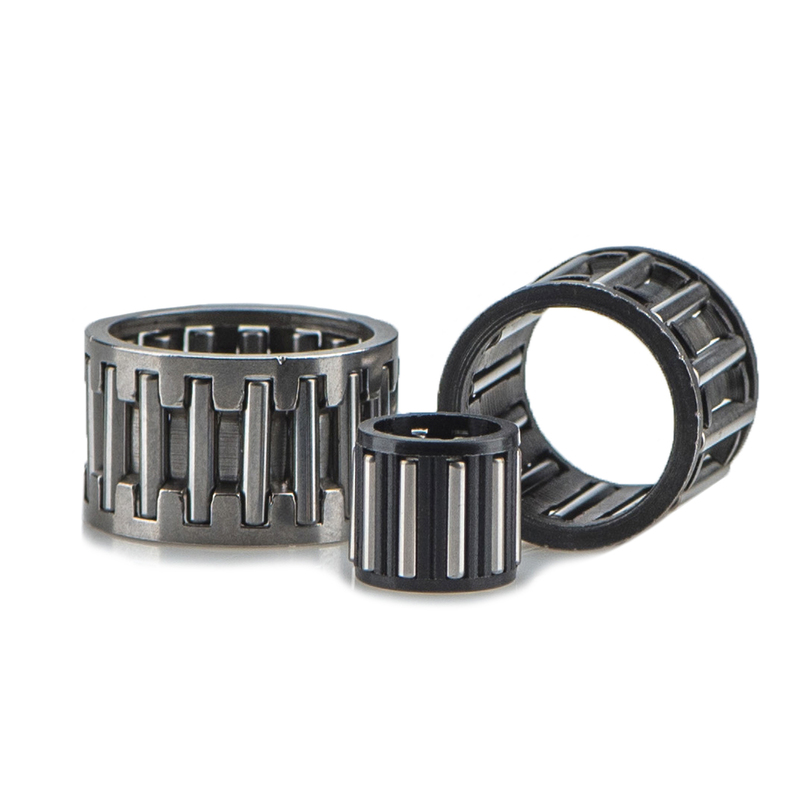
The KT Series is a radial cage and needle roller assembly, an independent bearing unit combining high load capacity and rigidity. It is especially suitable for shafts and housing bores with limited radial dimensions. Each needle roller is precisely guided and positioned by the cage, giving each roller excellent operating characteristics. The lightweight and compact design is suitable for high-speed operation and is commonly used in automotive engines, compressors, and industrial pumps.
A needle roller bearing size chart is a reference tool that provides information about bearing dimensions and specifications. Selecting the correct needle roller bearing is essential for optimal machinery and equipment performance and long service life.
The following image is taken from ISK BEARINGS official bearing model specifications, using NK7/10 from the NK Series as an example to explain each field.
1. Bearing No.
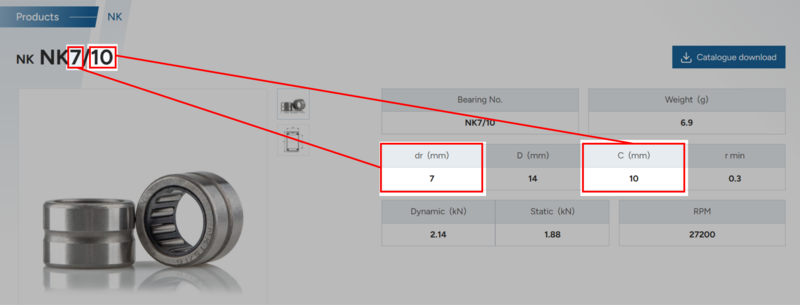
The alphanumeric size code is used as the part number to identify a specific needle roller bearing model. Standard bearing models are usually represented by bore diameter, outside diameter, and width.
2. Dimensions: bore dr / outside diameter D / width B(C)
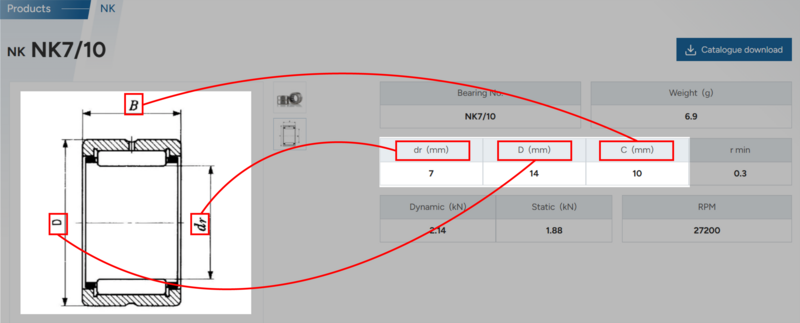
dr indicates bore diameter (ID), D indicates outside diameter (OD), and B(C) indicates width (W), all in mm.
3. Load Rating: Dynamic / Static
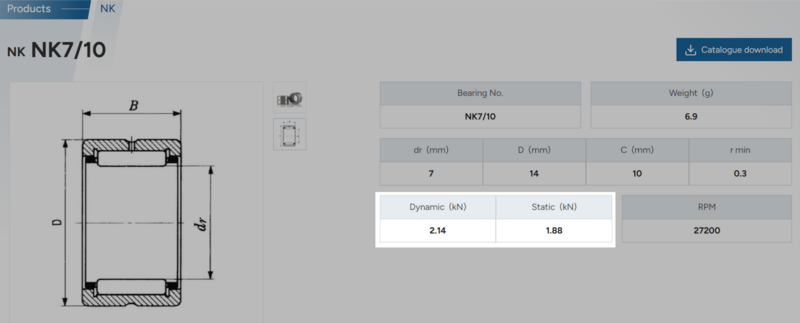
Dynamic indicates the dynamic load rating, or the maximum load the bearing can support while rotating. Static indicates the static load rating, or the maximum load the bearing can support while stationary.
4. Limiting Speed (RPM)
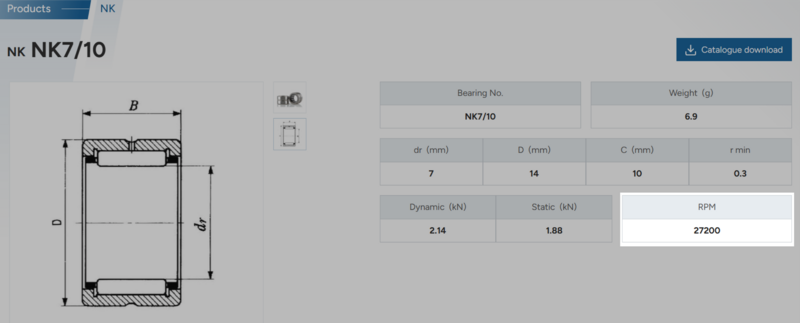
RPM indicates the maximum speed at which the bearing model can operate without excessive heat generation or premature damage.
5. Other Specifications (Weight, Chamfer, etc.)
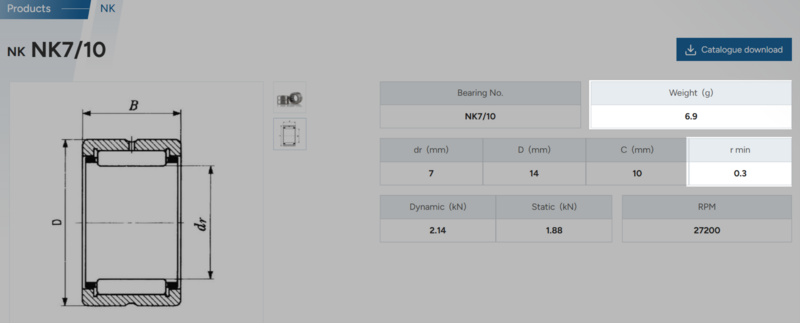
Most detailed model specifications on the ISK BEARINGS website also include weight (g), chamfer, and other information.
First, determine the key parameters required for your application, such as bore diameter, outside diameter, and width. Next, compare those dimensions with the available options in the size chart to identify suitable needle roller bearing models. Finally, consider load capacity, limiting speed, and other relevant factors to ensure optimal performance and service life.
Important note: needle roller bearing size charts may vary by manufacturer, series, or design. Refer to the manufacturer's official documentation or contact the manufacturer directly for the most accurate dimensional information.
 Use Now ISK BEARINGS bearing search function
Need help selecting the right needle roller bearing?
If you need help selecting a product for your industrial application, ISK BEARINGS provides application support as part of our service.
* ISK bearing accuracy conforms to internationally recognized standards: ABEC、ISO 492、DIN 620,and JIS B1514。
After understanding the main needle roller bearing types, the next step is to select the series that best matches the application. Engineers should consider load direction, available radial or axial space, shaft design, speed requirements, lubrication conditions, and whether an inner ring is required.
|
Bearing No. |
Bore(Fw)(mm) |
Outer(D)(mm) |
Width(C)(mm) |
Weight(g) |
|---|---|---|---|---|
| TLA 59 | 5 | 9 | 9 | 1.8 |
| TLA 69 | 6 | 10 | 9 | - |
| TLA 79 | 7 | 11 | 9 | 2 |
| TLA 810 | 8 | 12 | 10 | 2.1 |
| TA 810 | 8 | 15 | 10 | - |
| TA 815 | 8 | 15 | 15 | - |
| TA 912 | 9 | 16 | 12 | 1.8 |
| TA 916 | 9 | 16 | 16 | 2.1 |
| TLA 1010 | 10 | 14 | 10 | 2.2 |
| TLAM 1010 | 10 | 14 | 10 | 2.2 |
| TLA 1012 | 10 | 14 | 12 | 2.6 |
| TLAM 1012 | 10 | 14 | 12 | 2.3 |
| TLA 10142RS | 10 | 14 | 14 | 2.5 |
| TLA 1015 | 10 | 14 | 15 | - |
| TA 101610 | 10 | 16 | 10 | 2.3 |
 View full page: Drawn Cup Needle Roller Bearings - TA Series
Download TA Series PDF Catalogue
|
Bearing No. |
Bore(Fw)(mm) |
Outer(D)(mm) |
Width(C)(mm) |
Weight(g) |
|---|---|---|---|---|
| HK0306TN | 3 | 6.5 | 6 | - |
| SCE 55 + pg | 3.175 | 12.7 | 8.334 | 0.004 |
| SCE 21/24TN | 3.97 | 7.15 | 6.35 | - |
| BK0408TN | 4 | 8 | 8 | 1.8 |
| HK0408TN | 4 | 8 | 8 | 1.6 |
| SCE 34TN | 4.762 | 8.731 | 6.35 | - |
| HK0509 | 5 | 9 | 9 | 2 |
| BK0509 | 5 | 9 | 9 | 2.1 |
| HK0510 | 5 | 9 | 10 | - |
| HK0509TN | 5 | 11 | 9 | - |
| HK0606 | 6 | 10 | 6 | - |
| HK0607 | 6 | 10 | 7 | 1.8 |
| BK0608 | 6 | 10 | 8 | 2.2 |
| HK0608 | 6 | 10 | 8 | 2.1 |
| BK0609 | 6 | 10 | 9 | 2.6 |
View full page: Drawn Cup Needle Roller Bearings - HK/SCE Series
Download HK Series PDF Catalogue
|
Bearing No. (Plastic spring) |
Bearing No. (Stainless steel spring plate) |
Fw(mm) |
D(mm) |
C(mm) |
|---|---|---|---|---|
| HF0406KF | - | 4 | 8 | 6 |
| HF0406KFR | - | 4 | 8 | 6 |
| HK0608KF | - | 6 | 10 | 8 |
| HF0612KF | HF0612 | 6 | 10 | 12 |
| HF0612KFR | HF0612R | 6 | 10 | 12 |
| HF061207 | HF061207 | 6 | 12 | 7 |
| HF061210 | HF061210 | 6 | 12 | 10 |
| HF081210 | HF081210 | 8 | 12 | 10 |
| HF0812KF | HF0812 | 8 | 12 | 12 |
| HF0812KFR | HF0812R | 8 | 12 | 12 |
| HF08145.3KF | - | 8 | 14 | 5.3 |
| HF081410 | HF081410 | 8 | 14 | 10 |
| HF081412 | HF081412 | 8 | 14 | 12 |
| HF081607 | HF081607 | 8 | 16 | 7 |
| HF081610 | HK081610 | 8 | 16 | 10 |
View full page: One-Way Needle Roller Bearings - HF Series
Download HF Series PDF Catalogue
|
Bearing No. |
dr(mm) |
D(mm) |
C(mm) |
Weight(g) |
|---|---|---|---|---|
| NK5/12TN | 5 | 10 | 12 | 3.7 |
| NK6/10TN | 6 | 12 | 10 | 4.7 |
| NK6/12TN | 6 | 12 | 12 | 5.7 |
| NK7/10 | 7 | 14 | 10 | 6.9 |
| NK7/12 | 7 | 14 | 12 | 8.2 |
| NK8/12 | 8 | 15 | 12 | 8.7 |
| NK8/16 | 8 | 15 | 16 | 12 |
| NKS8 | 8 | 16 | 13 | 11 |
| NK9/12 | 9 | 16 | 12 | 10 |
| NK9/16 | 9 | 16 | 16 | 13 |
View full page: Machined Needle Roller Bearings - NK Series
Download NK Series PDF Catalogue
Need exact dimensions? If you already know the bearing series or model number, please visit our Needle Roller Bearing Size Chart page for detailed bore diameter, outside diameter, width, weight, and catalogue PDF information.
The better bearing depends on the application. Needle roller bearings have a smaller cross-sectional area and volume than ball bearings, but higher load-carrying capacity, giving them a clear advantage where space is limited, especially radial space. However, if the application requires high-speed rotation or heavy axial load capacity, ball bearings or tapered roller bearings may be more suitable.
Bearing model numbers mainly consist of a basic designation plus prefixes and suffixes, which identify dimensions, seals, clearance, precision, and special designs.
Basic designation: determines the type and size. For example, 6204 = category 62 and bore code 04 (20 mm).
Suffix code: indicates features such as sealing, precision, and clearance.
Prefix code: for example, U indicates a special outer-ring design.
Please provide your question. We’ll find you with the best support options.