Need Support?
Please provide your question. We’ll find you with the best support options.

Table of Contents
Why Do "Bearing + Secondary Processing" Parts Tend to Cause Trouble?
Is Splitting the Work Actually Cheaper? The Hidden Costs That Never Get Counted
How Does ISK's Single-Source Consolidated Supply Actually Work?
When Should I Consider Consolidated Supply Instead of Sourcing It Myself?
For bearings that need overmolding, outer-ring forming, or secondary machining, consolidating into a single-source supply chain is usually the more cost-effective choice—because the real cost isn't the machining itself. It's the back-and-forth coordination between multiple suppliers, duplicated freight, stretched lead times, and the fit disputes that no one is accountable for when something goes wrong.
If you're a procurement buyer or an R&D engineer wrestling with a part that is "a bearing plus a housing, an outer ring, or an overmolded component," this article aims to clarify one thing: splitting the work across suppliers may look attractive on unit price, but once you spread out the time, freight, communication, and quality risk, the total cost is often a different story.
When a part is split across different suppliers, fit accountability has no clear owner—so if the finished part is off, it's hard to tell whether the bearing side or the machining side needs adjustment.
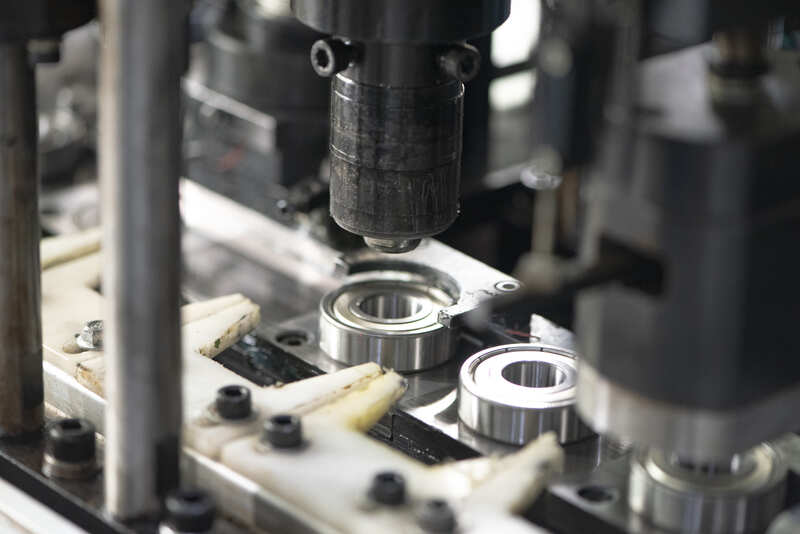
Take a roller-type component, common in industrial equipment. The traditional approach is to buy a standard bearing from one supplier, then send it to a separate machining shop to fit a housing or outer ring so it can function as a roller.
The problem is that the fit between the outer ring and the bearing is a precision dimensional relationship—once the tolerance match between the outer-ring bore and the bearing OD is off, you get failure modes such as press-fit interference that is too tight, wobble, or rough rotation.
When the bearing comes from Supplier A and the outer-ring machining comes from Supplier B, and the finished part fails, Supplier A points to a machining error while Supplier B points to bearing dimensions. The buyer is stuck in the middle, repeatedly forwarding drawings, submitting samples, and coordinating—while the issue sits between two shops with no one able to make the call.
This isn't about anyone being unprofessional; it's a structural problem caused by a break in the accountability chain.
Looking at the machining quote alone, it may seem cheaper—but once you add two rounds of freight, doubled lead time, internal coordination hours, and quality risk, the total cost of splitting the work is often higher.

Splitting a bearing that needs secondary processing across different suppliers generates several costs that are easy to overlook:
For procurement, this is a supply-stability issue. For engineering, it's the familiar symptom of "the drawing is correct, but the actual assembly doesn't go together." The point of cost optimization has never been to squeeze the unit price down—it's to lower the hidden costs across the entire chain.
ISK coordinates both bearing manufacturing and downstream processing, completes the entire chain under a single coordination flow, and delivers finished parts ready to go straight onto the line—with fit accountability owned by ISK from end to end.
.png)
ISK Bearings' consolidated supply approach is to manufacture the bearing body in-house and integrate long-term processing partners (covering rubber overmolding, secondary machining, surface treatment, and more), so the customer deals with a single point of contact from raising the requirement to receiving the finished part.
Consider a real forklift-roller application. The customer originally had to buy the bearing first, then send it to an outside machining shop to fit an outer ring for use as a roller—and had long been troubled by the back-and-forth communication between the two shops and by outer-ring fit issues.
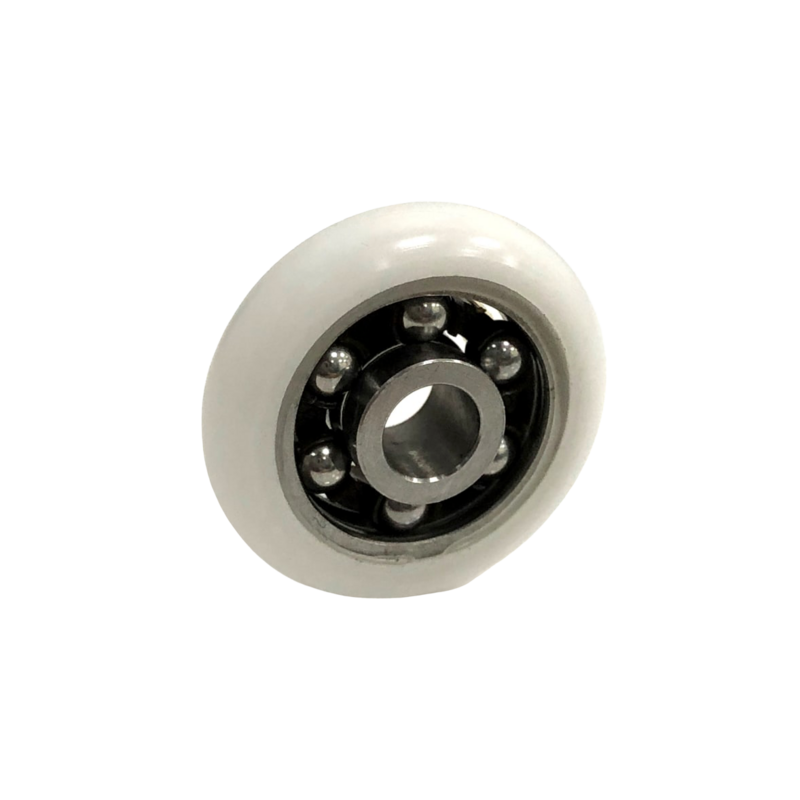
After ISK took over, ISK did not follow the "fit a separate outer ring" route. Instead, ISK chamfered and arc-formed the bearing's outer ring directly, so the outer ring itself becomes the running roller surface—eliminating the add-on component and the secondary machining step, removing fit error at the source, and making precision easier to control.
The key here isn't just "outsourcing on your behalf." It's redefining the part at the selection and structural level, merging what were two separate operations into one integrally formed solution.
When your part needs a secondary operation beyond the bearing, when cross-supplier coordination costs are high, or when you've already run into assembly trouble and fit disputes—consolidated supply usually lowers both total cost and management burden.
The following situations are particularly worth evaluating for a single-chain approach:
One important note: whether consolidation is the right fit—and which structural solution to use—still depends on the actual application, load conditions, tolerance fit, and confirmation via drawing or sample. Rather than trial-and-error across multiple suppliers on your own, it's more effective to lay out the application background clearly and let a partner who understands the whole chain help you judge the next step.
If you're evaluating a bearing part that needs secondary processing, share your application scenario, load and installation environment, estimated quantity, and the problem you're facing (a drawing or sample helps). We'll help you judge whether consolidated supply is the more cost-effective next step.
Not necessarily on machining unit price alone—but once you factor in two rounds of freight, doubled lead time, internal coordination hours, and fit-rework risk, consolidated supply usually holds a total-cost advantage. The focus is on lowering hidden costs, not squeezing the unit price.
Yes. For roller-type applications, the outer ring can be chamfered and arc-formed directly so that the outer ring itself becomes the running surface—removing the secondary machining of fitting a separate outer ring and reducing fit error at the source. Actual feasibility depends on the application and drawing.
Yes. We suggest providing the application scenario, load and installation environment, estimated quantity, and the problem you're currently facing. Even without a complete drawing, we can help assess the consolidation direction and feasible solutions.
Consolidated supply coordinates bearing manufacturing and downstream processing under a single point of contact—both ends of the chain have an owner and are traceable. If an issue arises, you deal directly with ISK, with no need to coordinate between different suppliers yourself.
They apply to industrial equipment, power-transmission components, hand tools, home appliances, and any manufacturing application requiring secondary processing on bearings. Regardless of whether your industry is a common one, if you have a fit or integration need that standard catalog parts can't solve, you're welcome to submit it for evaluation.
Please provide your question. We’ll find you with the best support options.