

Need Support?
Please provide your question. We’ll find you with the best support options.


Many bearing problems don't surface during flight testing—the outcome is often decided back at the selection stage.
Drone development teams usually know exactly which part number they want, but they don't always know how that spec behaves under real flight conditions. The same bearing at the motor, at the gimbal, or in a folding-arm joint faces completely different speeds, load directions, and environments. Buying part-number for part-number makes it easy to overlook those working-condition differences.
When you catch a mismatch determines what it costs to fix. Discovering a problem after it's installed, in the air, or even after volume production is far more expensive than nailing the conditions down at the selection stage.
Below, we break down the selection priorities for each of the drone's five core demands.
Drones are extremely weight-sensitive; every gram directly affects flight time and payload. As a rotating component, the bearing is often on the shortlist for weight reduction.
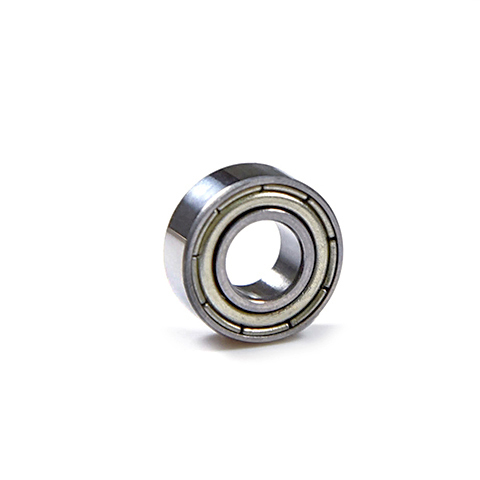
Which of these the airframe cannot compromise on needs to be assessed together with the application, load conditions, and mounting environment.
Drone motors and some drive modules are high-speed applications, where bearing performance ties directly to power efficiency, heat generation, and noise.
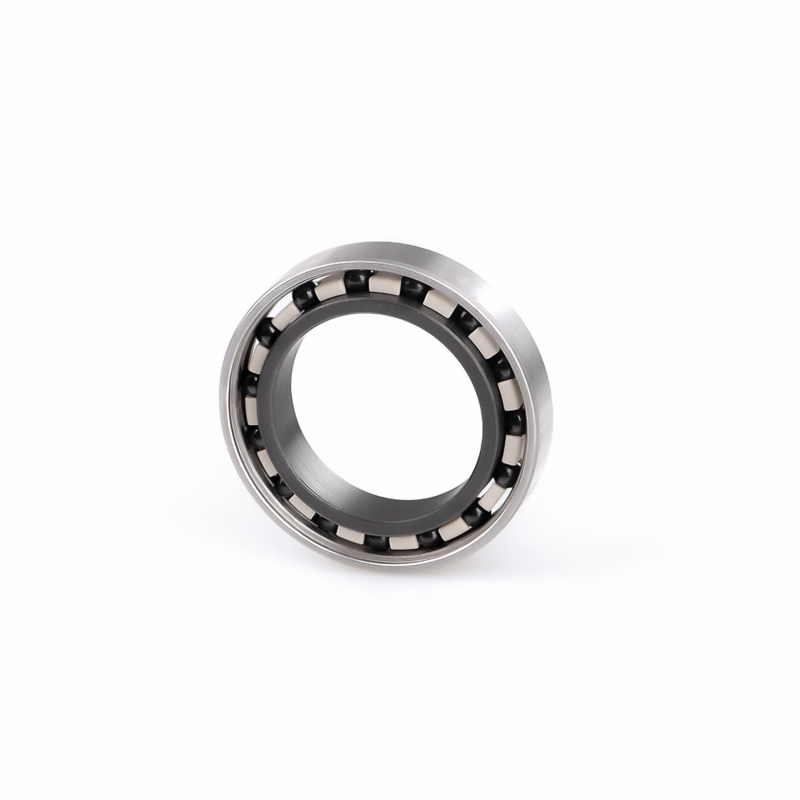
The ISK sales consulting team has handled many such cases—a customer reports abnormal running, and after deeper discussion the root cause turns out to be the press-fit condition, the mounting environment, or the grease. Find the right problem, and you can give the right solution.
As drones move into consumer, aerial-photography, and urban applications, noise has shifted from a "nice-to-have" to an explicit requirement on the spec sheet.
The bearing is one source of rotational noise.
Low-noise needs are often intertwined with high-speed and weather-resistance needs—the choice of seal type, for example, affects noise, protection, and friction all at once. That's why low noise shouldn't be solved in isolation, but judged back within the overall working conditions.
Drones operate heavily outdoors, facing temperature swings, humidity, dust, rain, and even salt mist (in coastal or marine applications).
These environmental conditions raise the demands on a bearing's corrosion resistance and sealing.
ISK operates an independent heat-treatment plant with a precision quenching process, and can evaluate combinations of material and surface treatment to suit the application—weather resistance doesn't come from a single parameter, but from a combined judgment across material, sealing, lubrication, and surface treatment.
Once a drone bearing fails in flight, the consequence can be a crash, payload loss, or even a safety incident. That gives "reliability" far more weight in drone applications than in ordinary consumer equipment.
Reliability isn't a single parameter—it's the combined result of the first four factors (weight, speed, noise, weather resistance) running long-term under real conditions.
Building reliability into the spec usually means answering a few questions:
- What are the actual direction and magnitude of the load on this bearing? (radial, axial, or combined)
- What is the continuous running speed range and working temperature range?
- What are the humidity, dust, and corrosion conditions of the operating environment?
- What is the press-fit condition and fit tolerance at installation?
- What is the expected service life and maintenance interval?
The clearer these conditions are, the more accurate and timely the selection judgment becomes.

ISK offers high-precision tolerance control from 0 to 0.003 mm and 100% automated quality inspection, and holds IATF 16949, RoHS, REACH, and SGS certifications—these are the foundational capabilities for carrying reliability through to production consistency.
If you have already organized the application conditions above, you're welcome to bring your requirements to ISK Bearings.
Let ISK Bearings help you evaluate the next step →
In our experience, drone development teams that bring bearings into the discussion at the following stages usually avoid high-cost corrections later:
If you're developing a drone or related drive module and any of the following apply, you're welcome to share the information so we can help evaluate:
The more complete the information, the more accurate and timely our selection judgment and quotation.
Share your application background and requirements to get a selection evaluation and quotation →
Please provide your question. We’ll find you with the best support options.