

.png)
Need Support?
Please provide your question. We’ll find you with the best support options.


The design direction in automation equipment is clear: robot arms — collaborative robots in particular — are asked to have lighter arm bodies for better dynamic response and energy efficiency, while their joints must withstand long hours of continuous operation without giving up repeatability. These goals are inherently in tension, and the bearing is often one of the key variables in that trade-off.
In discussions with automation equipment clients, ISK Bearings frequently sees this scenario: to cut weight, the design team reduces joint size or moves to a thinner bearing cross-section, only to find in volume production that operating life, rigidity, or positioning stability falls short of expectations. Lightweighting isn't simply about switching to a smaller bearing — it shifts the entire balance among load capacity, rigidity, backlash, heat generation, and service life.
This article covers the decision points we repeatedly see when supporting robot arm and robot clients on selection, and the information worth laying out together before a design is finalized.
Each joint of a robot arm — especially six-axis and collaborative types — places somewhat different demands on the bearing, but they usually fall along these dimensions:
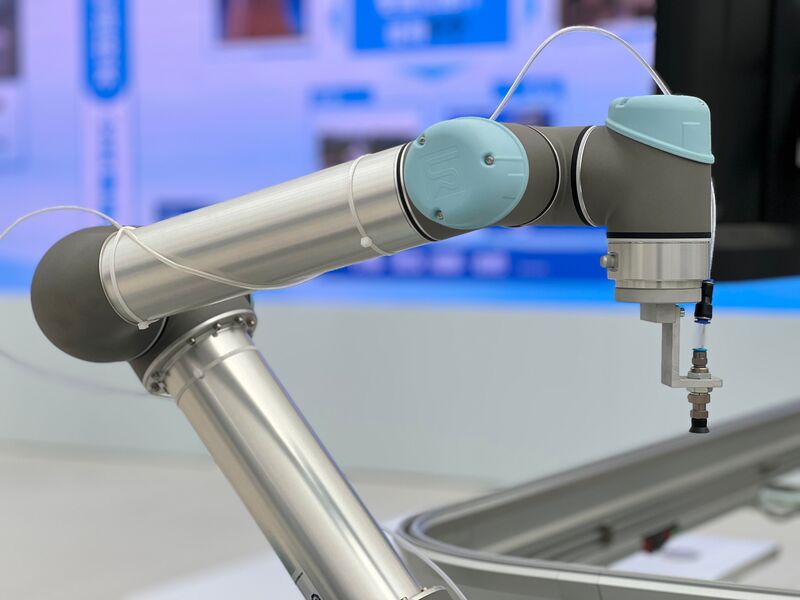
End-effector repeatability accumulates from the rotational accuracy of every joint.
The rotational accuracy and running smoothness of the joint bearing directly affect the positioning behavior of the whole arm.
The closer a joint sits to the end-effector, the more sensitive it tends to be to bearing accuracy.
 Further reading: Regarding Bearing Precision and Tolerances
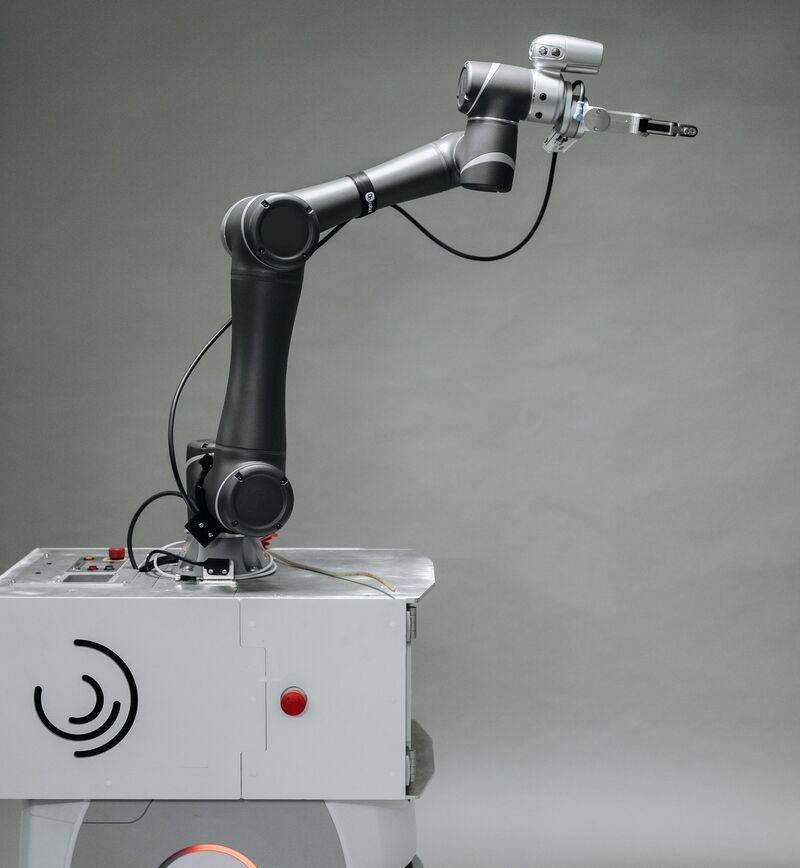
Backlash shows up as positioning error and inconsistent motion at the end-effector.For joints that frequently reverse direction and accelerate/decelerate, bearing arrangement and preload settings are an important part of controlling backlash while maintaining rigidity.
.jpg)
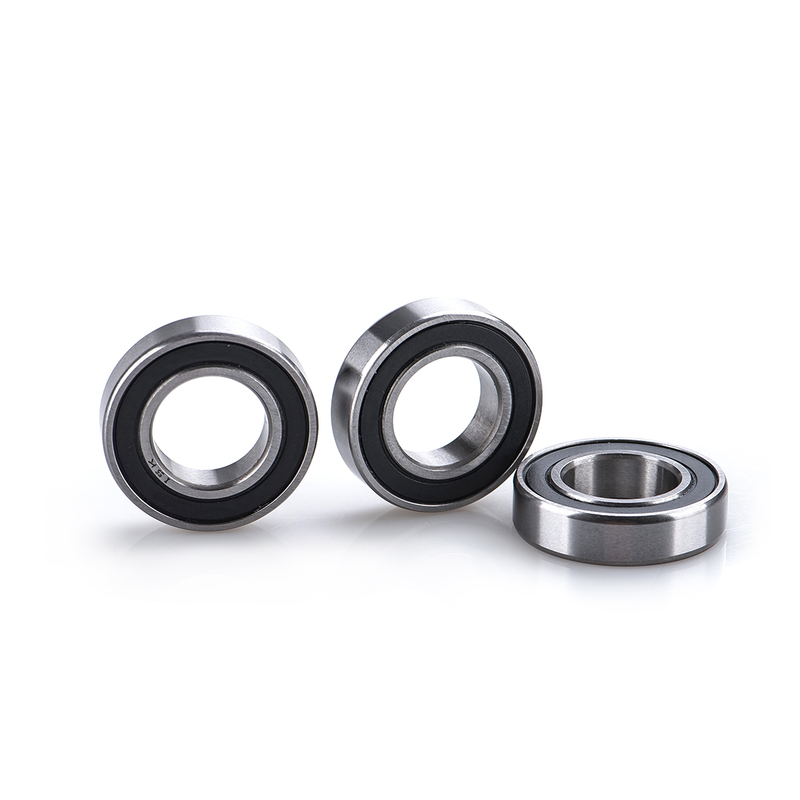
A lighter arm brings better dynamic response and energy efficiency, but weight reduction can't be judged by the mass of a single bearing alone — it feeds back into load margin, rigidity, and life, and must be evaluated within the whole joint structure.

Collaborative robots are often long-hour, continuous-operation applications.
The life and temperature-rise behavior of the joint bearing directly affect maintenance intervals and overall line uptime.These four move together and are hard to optimize in isolation — which is exactly where judgment matters most at the selection stage.
When lightweighting a robot arm joint, the following factors move together and are worth laying out side by side during selection:
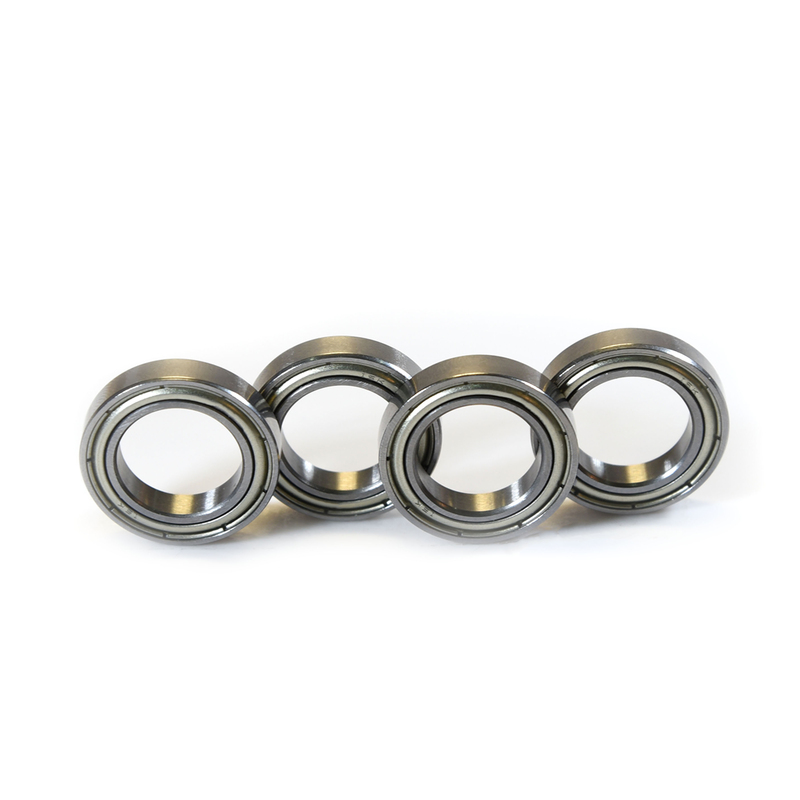
Thin-section or small-section bearings help reduce weight, but load and rigidity margins change accordingly and need to be re-evaluated against the joint's actual combined loads.
%20%E6%96%B06808%E4%B8%BB.jpg)
Under lightweighting goals, material choice and surface treatment affect wear and fatigue performance. This is often an area standard products don't fully cover, calling for customized judgment.

A more compact structure often leaves less room for heat dissipation, and temperature rise under continuous operation feeds back into lubrication life.

For the same weight target, adjusting bearing arrangement or preload may balance rigidity, backlash, and life better than simply switching to a smaller cross-section.
Further reading: What Factors Should Be Considered When Choosing a Bearing Lubricant?
There's no single standard answer among these variables — it depends on your arm's load, speed, duty cycle, and environment. Rather than discovering after volume production that one of these was sacrificed, it's better to work the whole relationship out before the design is locked.

We often remind clients of one thing: many bearing problems don't first appear in service — they're already set at the selection stage.
Clients usually know which part number they want, but aren't always familiar with how that spec behaves under actual operating conditions. When a joint is pushed to be lighter and more compact, a seemingly reasonable cross-section choice may show a gap between expected and actual life or rigidity under a specific load combination and duty cycle. When a problem is found determines the cost of correcting it: discovering a mismatch after assembly — or after volume production — costs far more than adjusting at the selection stage.
When our sales consulting team receives an inquiry, we assess whether that spec is genuinely suitable against the client's actual application, load conditions, and installation environment — this step is more like a partner helping you surface risk early, rather than just quoting a price for a part number.
Operating anomalies in a robot arm have many contributing factors and aren't necessarily the bearing itself.
We've handled plenty of cases like this: a client reports abnormal joint operation or shorter-than-expected life, and after deeper discussion the root cause turns out to lie in the press-fit condition, mounting fit, operating environment, or lubrication. Identifying the right problem is what enables the right solution — and this judgment often saves the client an unnecessary re-selection cost.
We've also seen another situation: the equipment is already built, and only during actual installation does it turn out the bearing dimensions can't fit the machine structure.
Rebuilding a whole machine costs far more than re-tooling — solving the installation problem through custom bearing production keeps the already-invested equipment development cost from going to waste.
What we do isn't just supply parts — it's help you judge which next step makes the most sense.
In automation, some joint components have long been treated as "normal wear" — replaced periodically, with everyone accustomed to the problem and rarely questioning the selection logic behind it.
We've had collaborations that began exactly here: a client had accepted periodic wear in a certain part, until we reviewed the possibilities in material and surface treatment together and proposed an arrangement standard products couldn't deliver.
We won't promise any life multiple or performance figure here — because operating conditions differ at every plant, and any number needs to be validated under your actual conditions. But the act of revisiting the selection logic itself is often where the value begins.
When a standard product can't reconcile lightweighting, precision, and life, we can evaluate a customized approach based on your application needs — from cross-section design and material to surface treatment — cross-checked against your operating conditions rather than applied from a generic spec.
If you're lightweighting a robot arm or collaborative robot and are focused on joint precision and life, the following helps us support your evaluation:
The earlier the weight-versus-precision-versus-life trade-off is worked out at the selection stage, the lower the correction cost after production begins.
If you're evaluating lightweighting, precision, and service-life questions for robot arm joints and already have a part number, drawing, or sample, share your application background and requirements — we'll help assess customization and selection directions.
Please provide your question. We’ll find you with the best support options.