
Need Support?
Please provide your question. We’ll find you with the best support options.

Need bearings? B2B bearing wholesale. Contact ISK BEARINGS now.
Before deciding whether to purchase or upgrade to ceramic bearings, buyers usually need to answer seven core questions: what they are, what types are available, what problems they solve, how they differ from bearing steel, what risks they involve, whether they suit the application, and what common concerns should be clarified. This guide follows that decision sequence and organizes the key information so you can read it in one place and make a more evidence-based judgment.
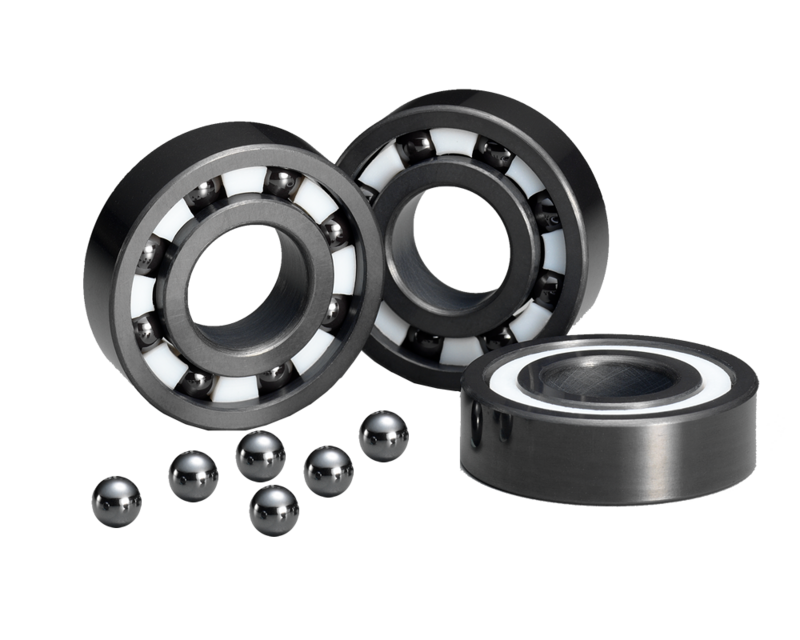
Ceramic bearings are special bearings whose rolling elements, such as balls or rollers, are made from ceramic materials. Their inner ring and outer ring may also be made from ceramic materials, or they may be paired with steel, stainless steel, or other ring materials. Common ceramic materials include silicon nitride (Si3N4), zirconia (ZrO2), silicon carbide (SiC), and alumina / aluminum oxide (Al2O3). Compared with traditional metal or alloy bearings, ceramic bearings offer core characteristics such as anti-magnetic and electrically insulating properties, wear resistance, corrosion resistance, high-temperature resistance, and oil-free lubrication. These properties allow them to operate steadily in harsh environments where conventional steel bearings may be difficult to use.
Understanding material differences is the first step in selection. Ceramic bearings are mainly divided into two categories: full ceramic bearings and hybrid ceramic bearings. In full ceramic bearings, the balls and both the inner and outer rings are made from ceramic. In hybrid ceramic bearings, ceramic balls are combined with metal rings, balancing the advantages of both material types.
2.png)
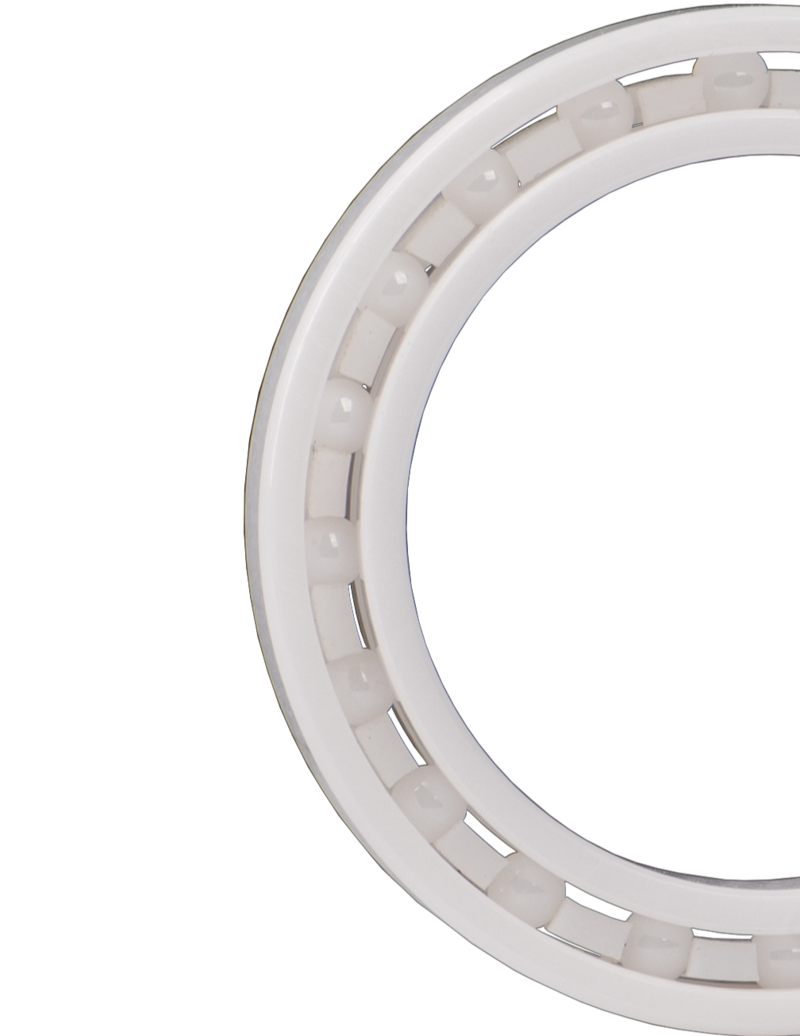
Zirconia ceramic bearings are known for their hardness, high strength, and wear resistance. They also demonstrate high corrosion resistance in most acidic and alkaline environments. Typical application scenarios include wet and high-temperature environments, such as turbochargers and cutting equipment.
2.png)
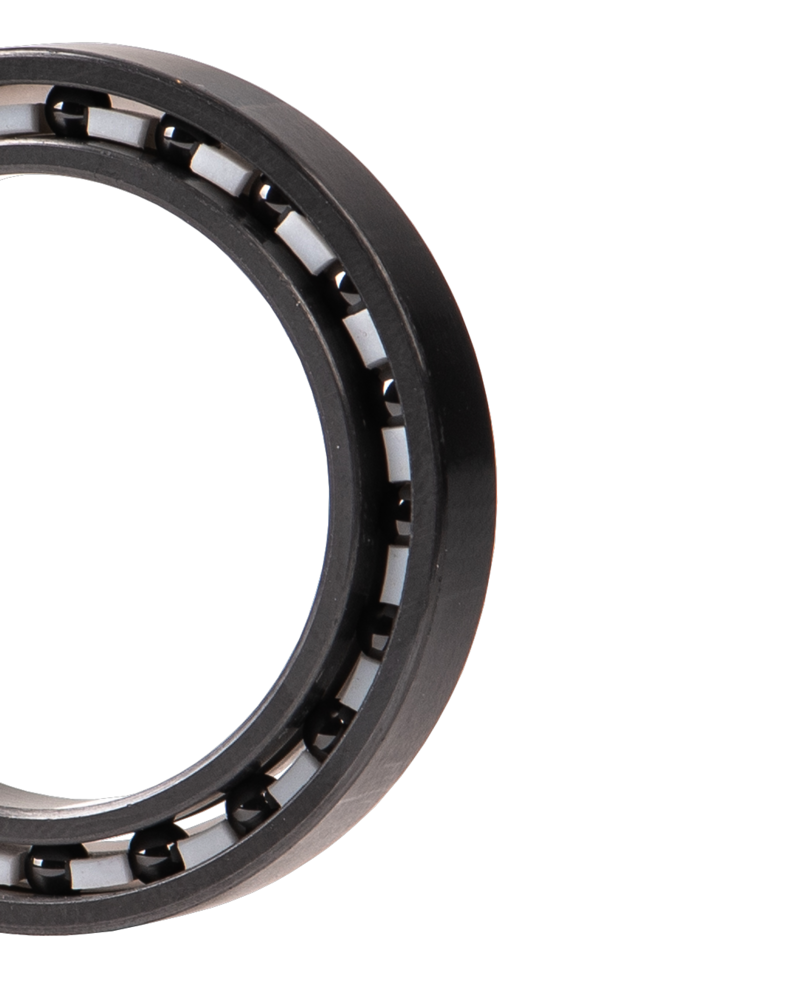
Silicon nitride ceramic bearings offer strong mechanical properties, including high strength, high-temperature resistance, and high thermal conductivity. They also have a low coefficient of friction and good thermal stability. Typical application scenarios include aerospace, semiconductor manufacturing, chemical processing, and other harsh environments.
Hybrid ceramic bearings combine ceramic balls with metal rings. Compared with conventional all-steel bearings, they provide better efficiency in speed, temperature resistance, and corrosion resistance, while retaining the toughness and durability of metal rings.
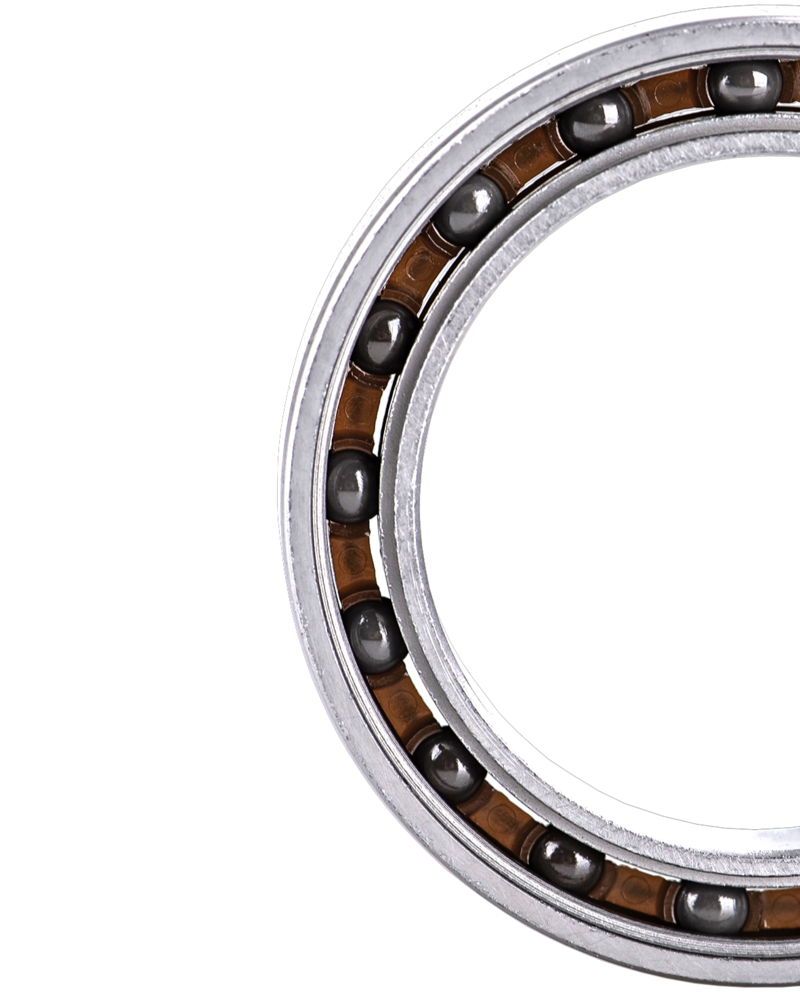
GCr15 is a type of high-carbon chromium bearing steel. In hybrid ceramic bearings, it is used for the inner and outer rings and paired with ceramic balls. This combination retains the advantages of ceramic balls, such as lighter weight and higher hardness, while still using the strength and durability of steel to provide better overall performance.
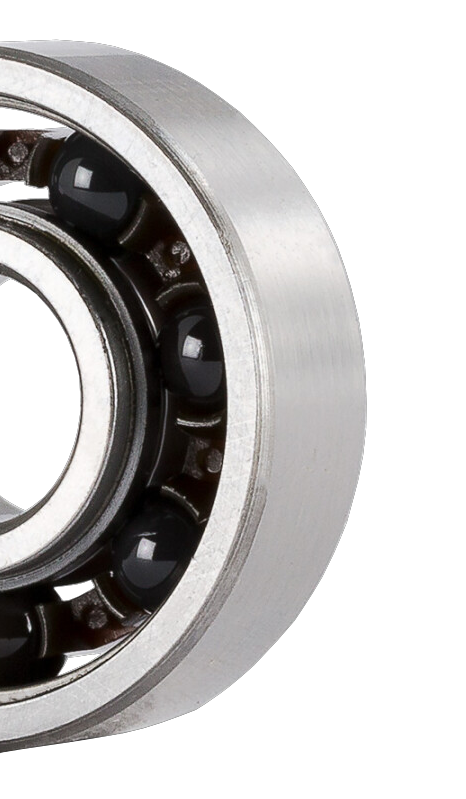
The inner and outer rings of stainless steel bearings are less prone to rust than general bearing steel. In hybrid ceramic bearings, stainless steel inner and outer rings are paired with ceramic balls, making them suitable for applications that require a certain degree of corrosion resistance and moisture resistance.
Material selection summary: Full ceramic bearings (ZrO2 / Si3N4) are suitable for corrosive or high-temperature extreme environments. Hybrid ceramic bearings (with GCr15 or SS rings) retain higher impact toughness while pursuing efficiency, making them a common starting option for many industrial upgrades.
Ceramic bearings are not universal components. They deliver the most value in specific environments. The following typical application scenarios correspond to their material properties and can be used as an initial application reference.
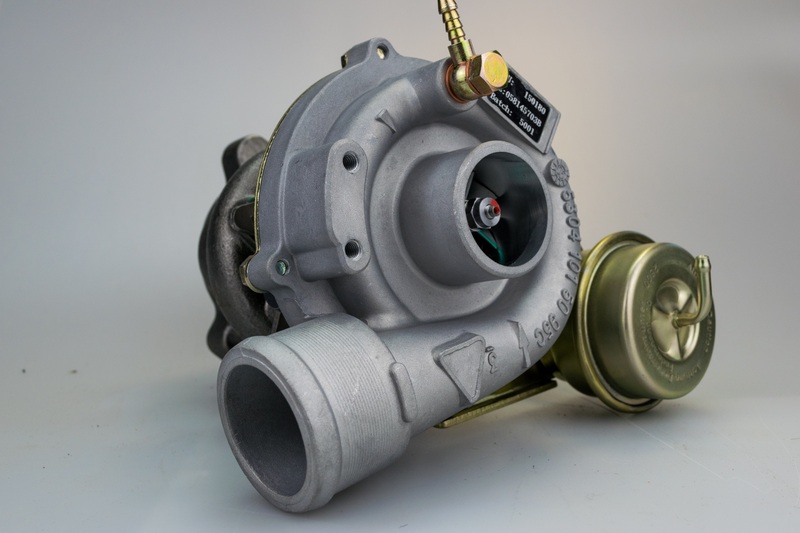
Zirconia (ZrO2) ceramic bearings demonstrate high corrosion resistance in most acidic and alkaline environments. Typical applications include turbochargers, cutting equipment, and other conditions that require stable operation in wet or high-temperature environments.

Silicon nitride (Si3N4) ceramic bearings are commonly used in aerospace, semiconductor manufacturing, chemical processing, and other harsh environments with high reliability requirements because they provide high strength, high-temperature resistance, and good thermal stability.

The non-conductive and non-magnetic properties of ceramic bearings make them a preferred accessory for electric motors controlled by variable frequency drives (VFDs).
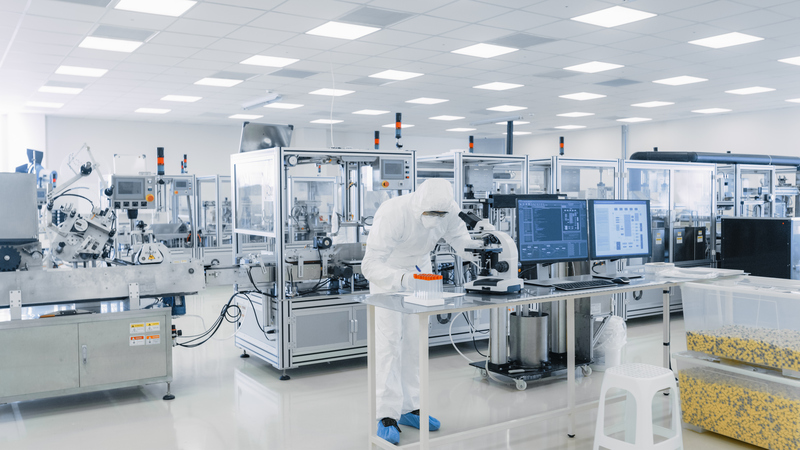
In applications that require high precision and stability, such as medical equipment or high-precision machine tools, the low coefficient of thermal expansion of ceramic materials can maintain precise clearance under temperature changes, thereby stabilizing mechanical performance.
After confirming that ceramic bearings can address your pain points, the next step is to quantify the difference between the two options. The following sections compare them across four dimensions: friction, corrosion, elasticity, and electrical conductivity.
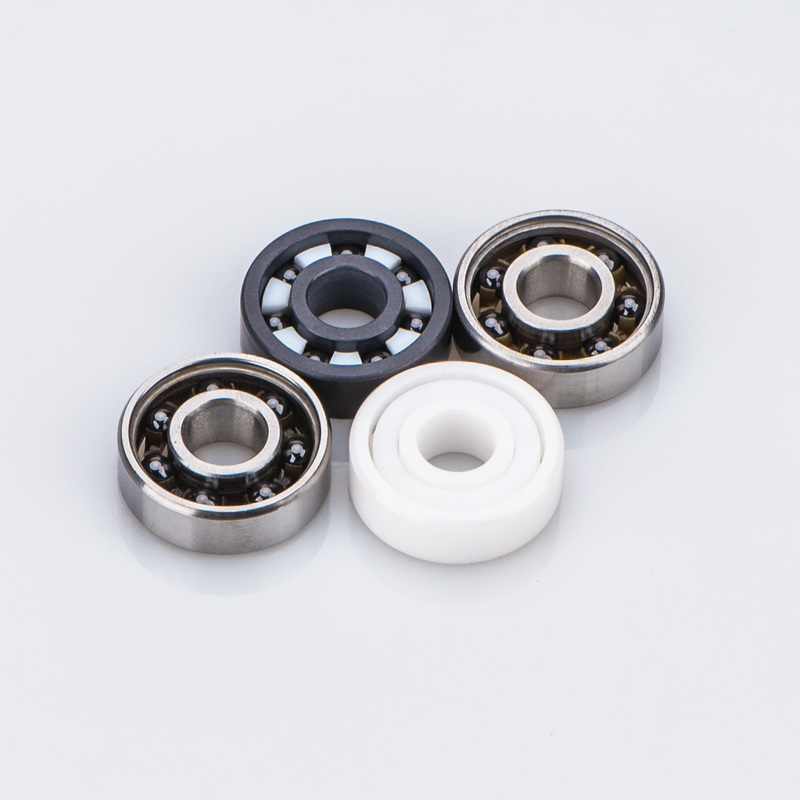
Ceramic bearings offer a better coefficient of friction than bearing steel because of their higher roundness, lighter weight, hardness, and smoothness. This allows ceramic bearings to reduce friction and energy loss, improve equipment operating efficiency, and maintain operating efficiency for a longer period. Ceramic bearings do not require large amounts of lubrication in the same way steel bearings do.
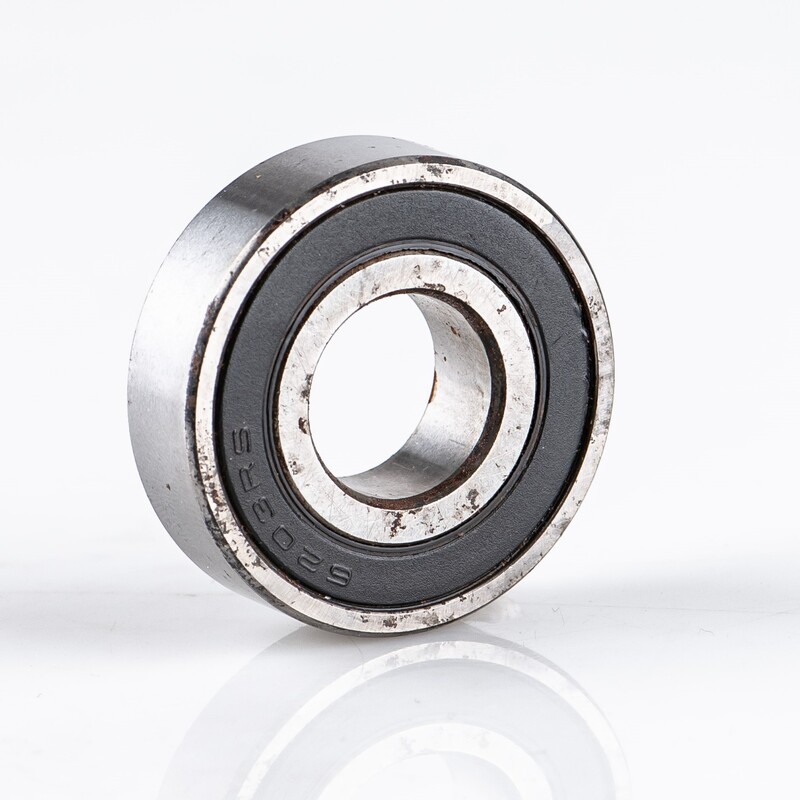
Corrosion is one of the most significant differences between steel bearings and ceramic bearings. Even under ideal lubrication, bearing steel will corrode over time, while ceramic bearings will not. In terms of corrosion, hybrid ceramic ball bearings may have a service life up to ten times longer than steel bearings.
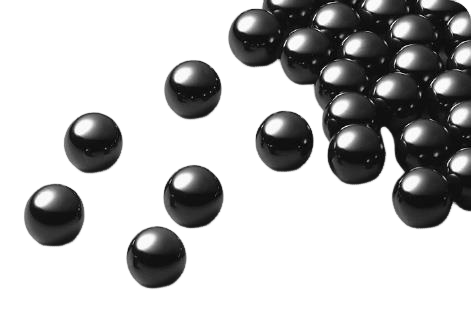
This is a dimension where ceramic bearings are relatively weaker. Ceramic balls have much lower elasticity than steel balls, which means that load conditions require special attention when considering an upgrade to ceramic bearings. Excessive loads or impacts may cause ceramic balls to damage the bearing raceway, which can affect spindle operation.
.png)
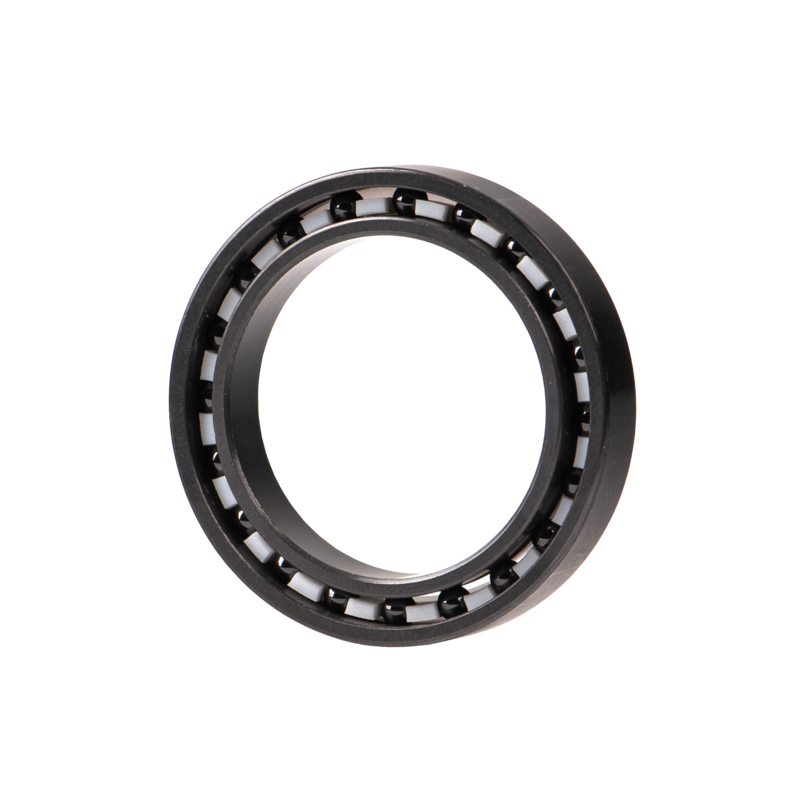
Electrical conductivity is another important difference between steel bearings and ceramic bearings. Ceramic bearings are non-magnetic and non-conductive. Therefore, in applications where electrical conductivity must be considered, such as electric motors controlled by variable frequency drives, ceramic bearings are usually a preferred option.
| Comparison Dimension | Ceramic Bearings | Bearing Steel |
|---|---|---|
| Material Composition | Mainly made from ceramic materials such as ZrO2, Si3N4, and Al2O3 | Mainly made from metal materials such as carbon steel or alloy steel |
| Hardness and Strength | High hardness (3–5 times that of steel balls), but higher brittleness | High strength and hardness, with better toughness |
| Coefficient of Friction | Lower, reducing energy loss | Higher, may require more lubrication |
| Corrosion Resistance | High, less susceptible to corrosion | Lower, requiring regular maintenance for corrosion prevention |
| Electrical Conductivity | Non-conductive and non-magnetic | Conductive |
| Weight | About 50% lighter than steel bearings | Standard weight |
| Cost | Usually more expensive than bearing steel | Usually more economical |
| Applicable Scenarios | Extreme environments involving high speed, high temperature, corrosive conditions, or electromagnetic sensitivity | Widely used in general industrial and mechanical equipment |
After the side-by-side comparison, this section reviews the advantages and risks of ceramic bearings vertically, giving purchasing decisions a more complete basis.
Lighter weight: Ceramic bearings are about 50% lighter than steel bearings. This reduces centrifugal force and friction, especially improving performance in high-speed operation. For racing or precision applications that pursue every gram of weight reduction, this remains a clear advantage.
Higher hardness and wear resistance: The hardness of ceramic balls is 3–5 times that of steel balls, enabling ceramic bearings to withstand greater force and extend bearing service life. Because ceramic balls and steel raceways involve non-metallic contact, they also reduce the risk of corrosion and wear.
Low friction and high efficiency: Ceramic materials have smooth surfaces and a low coefficient of friction, reducing energy loss. This is especially important for applications that require high efficiency, such as high-performance machinery or precision equipment.
Corrosion resistance: Ceramic materials are highly resistant to most chemicals and solvents, are less prone to rust, and are suitable for humid or corrosive environments.
Low coefficient of thermal expansion: Ceramic materials have a low coefficient of thermal expansion. In environments with larger temperature changes, this helps maintain precise clearance and preserve mechanical performance stability.
High cost: The cost of manufacturing ceramic bearings is significantly higher than that of traditional steel bearings, requiring a larger initial investment. This cost difference is especially clear in applications requiring large quantities of bearings.
Brittleness and lower toughness: Although ceramic materials are very hard, they are also more brittle and have lower tolerance to impact and vibration. Ceramic bearings are more easily affected by extreme impact and thermal stress than metal bearings. In some high-load or unstable operating environments, this can become a potential risk. It is worth noting that the inherent low coefficient of friction and high thermal conductivity of ceramic materials still make them suitable for stable, harsh environments involving long-term high or low temperatures, but not for applications with frequent impact.
Relatively narrow application range: Because of their special properties, not every application requires the performance of ceramic bearings. In low-speed or medium-speed machinery, steel bearings are already sufficiently reliable and economical. Ceramic bearings have clear applicable scenarios, but their use range is narrower than that of general steel bearings, so selection requires more careful application evaluation.
Overall, although ceramic bearings have advantageous characteristics, their brittleness and cost limitations must be considered during use. To ensure normal bearing operation and long service life, evaluation based on the specific requirements and conditions of each industry is necessary.
This is the core decision point of the article. Based on the source information, the following two sets of scenario criteria can be used as references for purchasers.
Harsh corrosive or extreme-temperature environments: In highly corrosive environments or long-term extreme-temperature conditions, the resistance of ceramic bearings makes them an ideal option, helping extend equipment life and reduce replacement or repair frequency.
Applications aiming to reduce maintenance frequency and cost: The long service life and low-friction characteristics of ceramic bearings can provide greater long-term economic benefits. If downtime and maintenance costs are high, or maintenance resources are limited, the low-maintenance requirements of ceramic bearings offer a clear return-on-investment advantage.
Precision machinery and high-stability applications: In applications requiring high precision and stability, such as medical equipment or high-precision machine tools, the low thermal expansion and low-friction characteristics of ceramic bearings are highly visible advantages.
Electrically sensitive equipment: In electric motors controlled by variable frequency drives, or other equipment with requirements related to electrical conductivity, the non-conductive property of ceramic bearings is an irreplaceable advantage.
Applications pursuing high-speed performance: For applications requiring speed upgrades, high loads, or high speeds, or equipment requiring additional axial and radial rigidity while maintaining speed capability, ceramic bearings are worth evaluating.
Cost is the decisive factor: For applications that are highly cost-sensitive, or situations requiring bulk purchasing, steel bearings usually have lower manufacturing costs and are an economical option in many applications.
Applications requiring high elasticity or frequent impact resistance: Bearing steel has higher toughness and elasticity. When subjected to loads or impact, it can elastically deform more effectively and is less likely to fracture. If equipment operation involves frequent impact, the brittleness of ceramic materials may become a risk factor.
Low-speed or medium-speed general industrial equipment: Not every application requires the performance of ceramic bearings. In low-speed or medium-speed machinery, steel bearings are already sufficiently reliable and economical, and the return on investment from upgrading may be relatively limited.
Applications requiring faster supply turnaround: Compared with ceramic bearings, steel bearings are easier to machine and usually offer broader supply options. In situations requiring fast turnaround, steel bearings often provide greater purchasing flexibility.
Bearing steel and ceramic bearings each have their own advantages and applicable scenarios. Whether an upgrade is worthwhile should be evaluated based on specific application requirements, budget considerations, and long-term benefits, rather than only comparing initial purchase cost.
In harsh and special application environments, ceramic bearings perform well and offer characteristics such as high-temperature resistance, corrosion resistance, anti-magnetic and electrically insulating properties, and oil-free self-lubricating performance. For applications pursuing maximum performance, such as racing bicycles or precision medical equipment, ceramic bearings can provide lighter weight and lower friction, thereby significantly improving efficiency. However, for general-purpose use, steel bearings remain an economical and reliable option.
Advantages: high hardness, wear resistance, corrosion resistance (acid and alkaline resistance), high- and low-temperature resistance, light weight (50% lighter than steel), low coefficient of friction, anti-magnetic and electrically insulating properties, and low coefficient of thermal expansion. Disadvantages: high cost, brittleness (lower tolerance to impact and vibration), lower toughness, and a narrower selection range.
In full ceramic bearings, the balls and both the inner and outer rings are made from ceramic materials, such as ZrO2 or Si3N4. They are suitable for applications requiring complete electrical insulation or extreme corrosive environments. Hybrid ceramic bearings combine ceramic balls with chromium steel (GCr15) or stainless steel (SS) inner and outer rings. They balance the advantages of ceramic balls, including lighter weight, higher hardness, and low friction, with the strength and durability of metal rings, making them a common starting option for more industrial upgrade applications.
Please provide your question. We’ll find you with the best support options.