
.jpg)
 Contact Us
 TOP
TOPNeed Support?
Please provide your question. We’ll find you with the best support options.

Table of Contents
2. Where are Thrust Bearings Used
3. What Types of Thrust Bearings Exist
4. Structure and Function of Thrust Bearings
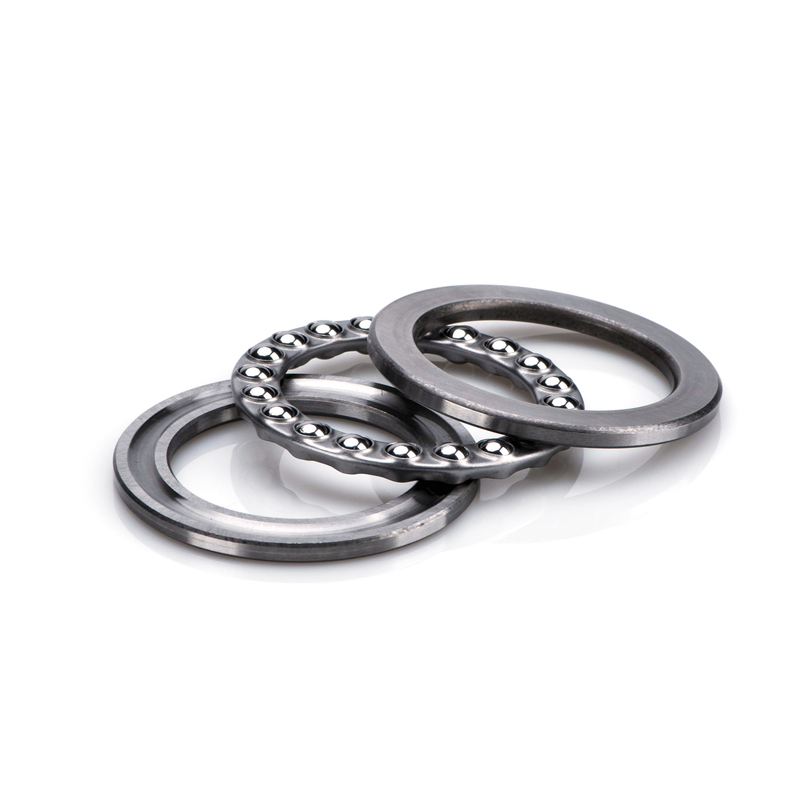
Thrust bearings (also called push bearings or axial bearings) can be divided into two major categories: Thrust Ball Bearings and Thrust Needle Bearings.
Specifically designed to absorb the axial forces of a shaft, compared to radial bearings which primarily bear radial loads, thrust bearings focus on handling forces parallel to the shaft axis. They are typically used to support the end of a rotating shaft, enabling it to maintain stable operation under load.
Thrust bearings (push bearings or axial bearings) are critical components in many industrial applications, especially in mechanical systems that endure high loads and high speeds. A high-quality push bearing can provide stable operation and long-term reliability.
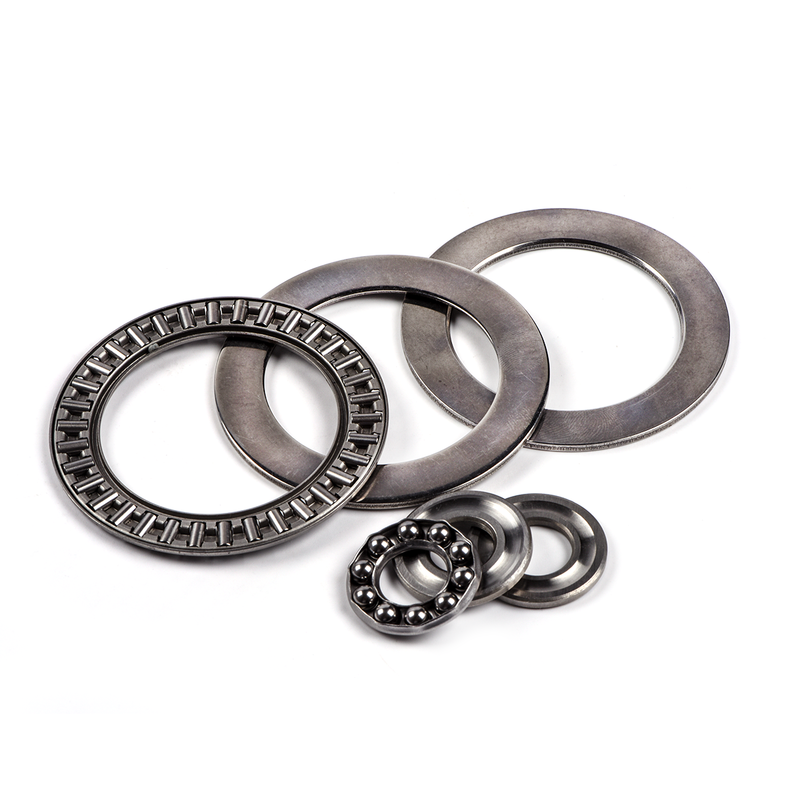

Thrust bearings play a critical role in many mechanical devices, such as automotive transmissions, clutches, fans, pumps, and compressors.
Their primary purpose is to ensure that rotating mechanical components operate smoothly, thereby improving overall equipment performance.
Thrust bearings are mainly divided into two major categories: Thrust Ball Bearings (Thrust Ball Bearings) and Thrust Needle Bearings (Thrust Roller Bearings), which are designed to withstand axial or thrust loads.
1. Ball Thrust Bearings
2. Roller Thrust Bearings
%20new.jpg)
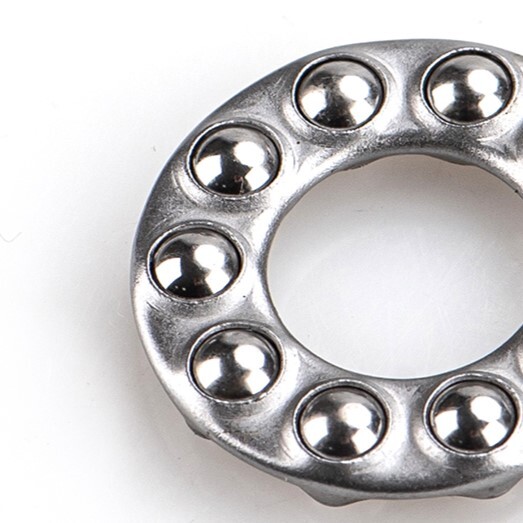
Thrust Ball Bearings use spherical balls as rolling elements, composed of one or more balls positioned within a bearing seat.
This type of bearing is commonly used in low-speed applications and can withstand small to medium axial loads.
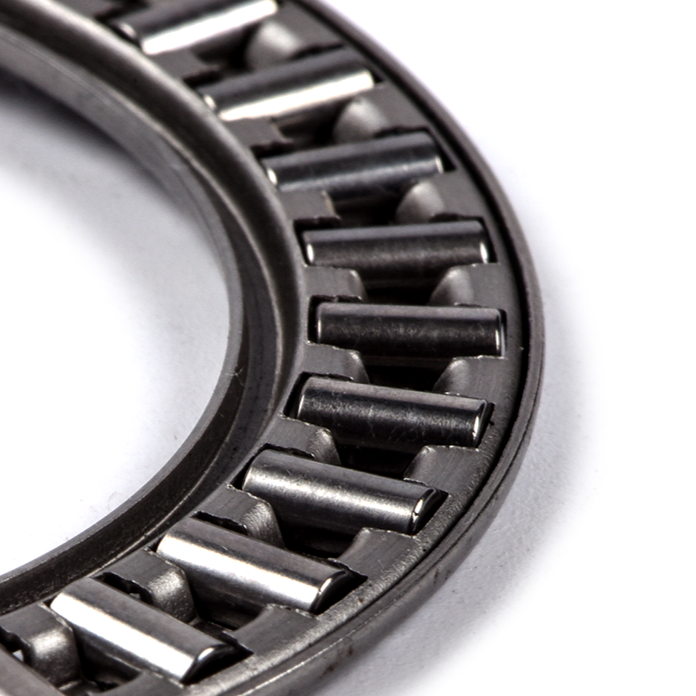
Thrust roller bearings use rollers as rolling elements. Based on roller shape, they are divided into Thrust Needle Bearings (Thrust Needle Bearings) and Thrust Cylindrical Bearings (Thrust Cylindrical Bearings):
| Characteristics | Thrust Ball Bearings | Thrust Needle Bearings |
|---|---|---|
| Rolling Elements | Spherical balls | Cylindrical rollers |
| Load Distribution | Smaller ball size makes load concentration easier | Capable of distributing larger axial loads, providing larger contact area |
| Load Capacity | Smaller | Larger |
| Friction | Usually smaller | Usually larger |
| Application Scenarios | Axial loads, high-speed scenarios | Axial loads, space-constrained scenarios |
| Speed | Usually higher | Usually lower |
Thrust ball bearings and thrust needle bearings are common types of thrust bearings. Selection of appropriate bearings should be based on load magnitude, speed requirements, space limitations, and structural complexity factors.
Thrust bearing structure typically consists of one or more axial balls or rollers positioned within a dedicated bearing seat. This design not only withstands high axial loads but also maintains low friction. Additionally, thrust bearing balls or rollers are usually equipped with a retainer to ensure proper positioning.
Thrust Needle Bearings (Thrust roller bearing) is a specialized type of bearing primarily used to withstand axial loads and effectively transmit and support axial forces between the shaft and bearing housing. It typically consists of one or more needle rollers (needle-shaped rollers) and one or more retainers.
Needle rollers are slender cylindrical components with a relatively small diameter that matches the inner diameter of the bearing. The length of needle rollers is typically much greater than their diameter, enabling them to effectively withstand axial loads. Due to their small diameter, the overall bearing size is relatively small, making it well-suited for installation in machinery with limited space.
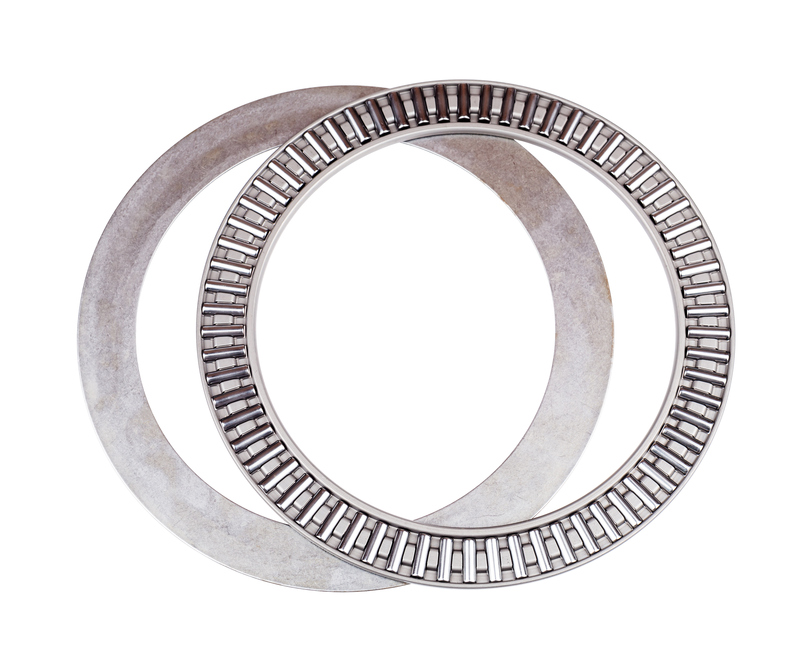
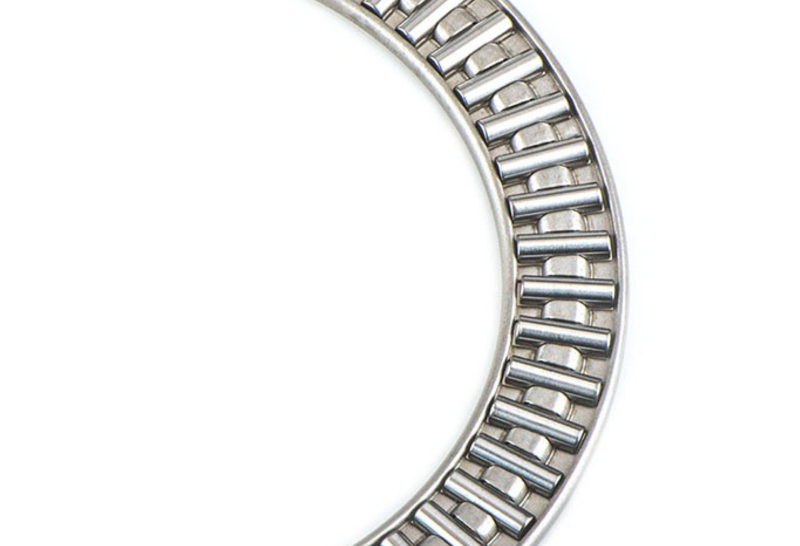
The retainer's function is to maintain the spacing between needle rollers, ensuring even distribution and preventing mutual collision between needle rollers. The retainer can be made of metal, plastic, or other wear-resistant materials to provide proper support and axial guidance.
In summary, thrust needle bearings (Thrust roller bearing) are a specialized type of bearing designed for bearing axial loads. Their structure is compact and can provide efficient axial support within limited space.
It is worth noting that thrust needle bearings primarily handle axial loads, and their capacity for bearing radial loads is relatively lower. If simultaneous bearing of radial loads and axial loads is required, it may be necessary to use other types of bearings or combine different types of bearings to achieve the required support.
Selecting the appropriate thrust bearing is a critical step in ensuring smooth machinery operation.
The following are some important factors to consider when selecting the appropriate thrust bearing:
- Load Type and Magnitude: You need to determine the type and magnitude of loads in your application to ensure that the selected bearings can effectively withstand these loads.
- Operating Speed: If your application requires high-speed operation, thrust ball bearings may be a better choice. For larger loads, you may need to consider using cylindrical roller thrust bearings.
- Installation Space: Consider the available installation space in your mechanical equipment to determine the appropriate thrust bearing size.
Furthermore, you should also consider the manufacturer's reputation and product quality to ensure that the thrust bearings you purchase have excellent durability and reliability. By carefully considering these factors, you can find the thrust bearing best suited to your application, thereby ensuring smooth and reliable operation of your equipment.
|
Bearing No. (Flat type) |
Bore(d)(mm) |
Outer(D)(mm) |
T(mm) |
|---|---|---|---|
| F4-9M | 4 | 9 | 4 |
| F4-10M | 4 | 10 | 4 |
| F5-10M | 5 | 10 | 4 |
| F5-11M | 5 | 11 | 4.5 |
| F5-12M | 5 | 12 | 4.5 |
| F6-12M | 6 | 12 | 4.5 |
| F6-14M | 6 | 14 | 5 |
| F7-13M | 7 | 13 | 4.5 |
| F7-15M | 7 | 15 | 5.5 |
| F7-17M | 7 | 17 | 6 |
| F8-16M | 8 | 16 | 5 |
| F8-19M | 8 | 19 | 7 |
| F8-22M | 8 | 22 | 7 |
| F9-17M | 9 | 17 | 5 |
| F9-19M | 9 | 19 | 6.5 |
|
Bearing No. (Flat type) |
Bore(d)(mm) |
Outer(D)(mm) |
T(mm) |
r(mm) |
|---|---|---|---|---|
| F9-20M | 9 | 20 | 7 | - |
| F10-18M | 10 | 18 | 5.5 | - |
| 51100 | 10 | 24 | 9 | 0.5 |
| 51200 | 10 | 26 | 11 | 1 |
| F12-23M | 12 | 23 | 7.5 | - |
| 51101 | 12 | 26 | 9 | 0.5 |
| 51201 | 12 | 28 | 11 | 1 |
| 51102 | 15 | 28 | 9 | 0.5 |
| 51202 | 15 | 32 | 12 | 1 |
| 51103 | 17 | 30 | 9 | 0.5 |
| 51203 | 17 | 35 | 12 | 1 |
| 51104 | 20 | 35 | 10 | 0.5 |
| 51204 | 20 | 40 | 14 | 1 |
| 51105 | 25 | 42 | 11 | 1 |
| 51205 | 25 | 47 | 15 | 1 |
Complete Thrust Ball Bearings Catalog
| Thrust Needle Bearings Specifications | |||||
|---|---|---|---|---|---|
|
Bearing No. |
Bearing No. (Thrust bearings plate) |
Bearing No. (Bearings plate) |
Dc1(mm) |
Dc(mm) |
DW(mm) |
| AXK 0414TN | AS 0414 | - | 4 | 14 | 2 |
| AXK 0515TN | AS 0515 | - | 5 | 15 | 2 |
| AXK 0619TN | AS 0619 | LS 0619 | 6 | 19 | 2 |
| AXK 0821TN | AS 0821 | LS 0821 | 8 | 21 | 2 |
| AXK 1024 | AS 1024 | LS 1024 | 10 | 24 | 2 |
| AXK 1226 | AS 1226 | LS 1226 | 12 | 26 | 2 |
| AXK 1528 | AS 1528 | LS 1528 | 15 | 28 | 2 |
| AXK 1730 | AS 1730 | LS 1730 | 17 | 30 | 2 |
| AXK 2035 | AS 2035 | LS 2035 | 20 | 35 | 2 |
| AXK 2542 | AS 2542 | LS 2542 | 25 | 42 | 2 |
| AXK 3047 | AS 3047 | LS 3047 | 30 | 47 | 2 |
| AXK 3552 | AS 3552 | LS 3552 | 35 | 52 | 2 |
| AXK 4060 | AS 4060 | LS 4060 | 40 | 60 | 3 |
| AXK 4565 | AS 4565 | LS 4565 | 45 | 65 | 3 |
| AXK 5070 | AS 5070 | LS 5070 | 50 | 70 | 3 |
Thrust bearings play an important role in various mechanical applications, and selecting the appropriate thrust bearing is crucial for ensuring stable operation of the equipment. By understanding the basics of thrust bearings and consulting relevant product catalogs, you can better select products that meet your needs and ensure equipment performance and reliability.
Miniature thrust bearings are an extremely small bearing type specifically designed to support and withstand axial loads.
These bearings are primarily used in miniature mechanical fields, including precision instruments, small electronic devices, and model manufacturing, to provide reliable axial support.
|
Bearing No. (Flat type) |
Bore(d)(mm) |
Outer(D)(mm) |
T(mm) |
r(mm) |
|---|---|---|---|---|
| F3-8M | 3 | 8 | 4 | - |
| F4-9M | 4 | 9 | 4 | - |
| F4-10M | 4 | 10 | 4 | - |
| F5-10M | 5 | 10 | 4 | - |
| F5-11M | 5 | 11 | 4.5 | - |
| F5-12M | 5 | 12 | 4.5 | - |
| F6-12M | 6 | 12 | 4.5 | - |
| F6-14M | 6 | 14 | 5 | - |
| F7-13M | 7 | 13 | 4.5 | - |
| F7-15M | 7 | 15 | 5.5 | - |
| F7-17M | 7 | 17 | 6 | - |
| F8-16M | 8 | 16 | 5 | - |
| F8-19M | 8 | 19 | 7 | - |
| F8-22M | 8 | 22 | 7 | - |
| F9-17M | 9 | 17 | 5 | - |
| F9-20M | 9 | 20 | 7 | - |
| F10-18M | 10 | 18 | 5.5 | - |
| F12-23M | 12 | 23 | 7.5 | - |
Key Summary
Thrust bearings are a precision transmission component. By understanding the working principles, types, structure and function, and application scenarios of thrust bearings, you can select appropriate thrust bearing products more scientifically. In the selection process, you should focus on considering load type, operating speed, and installation space factors, and choose ball or needle types according to application requirements.
Please provide your question. We’ll find you with the best support options.