Need Support?
Please provide your question. We’ll find you with the best support options.

Summary
Self-lubricating bearings (also known as dry bearings, DU bearings, sleeve bearings, plain bearings, bushings, shaft sleeves, oilless bearings, and more) are a type of sliding bearing that operates on the self-lubricating properties of the material itself, eliminating the need for continuous external liquid lubrication. They are typically composed of three bonded layers: a steel backing, a porous bronze layer, and a PTFE lining. This article serves as the core knowledge guide for self-lubricating bearings, covering definitions, aliases, structural principles, forms, materials, advantages, applications, and selection criteria — the most complete starting point for understanding self-lubricating bearings.
Table of Contents
- What Are Self-Lubricating Bearings? Definition & Full Alias Reference
- Three-Layer Structure & Working Principle of Self-Lubricating Bearings
- Four Structural Forms of Self-Lubricating Bearings
- Material Types of Self-Lubricating Bearings
- Six Key Advantages of Self-Lubricating Bearings
- Industries & Applications
- Self-Lubricating Bearings vs. Ball Bearings: Quick Summary
- Selection Considerations (Quick Reference)
- SF-1 Model Specification Table
Self-lubricating bearings are simple cylindrical components used to reduce friction between two moving parts and to support and guide rotational or sliding motion. Their defining characteristic is: they operate on the self-lubricating properties of the material itself, requiring no continuous supply of external liquid lubricant.
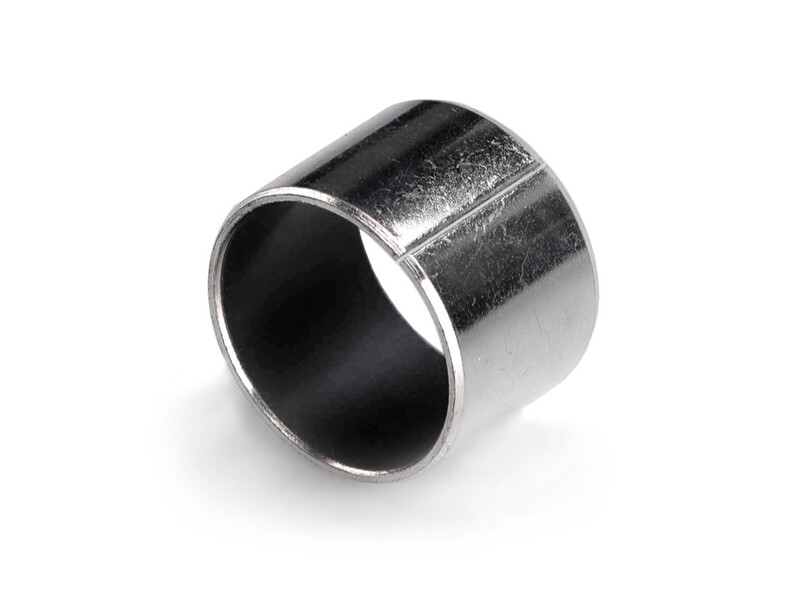
Across different industries and contexts, self-lubricating bearings are known by many names.
The following table consolidates all common aliases to help you communicate with suppliers or conduct accurate searches:
| Common Name / Alias | Usage Context & Description |
|---|---|
| Self-Lubricating Bearing | As the name implies, emphasizes the "self-lubricating" property — components made from self-lubricating materials that require no lubricant or oil of any kind. |
| Dry Bearing | Emphasizes oil-free, dry-run operation — capable of running without any additional lubrication. |
| Oilless Bearing | The English name literally indicates a bearing that operates with no oil, minimal oil, or without requiring oiling. |
| DU Bearing | DU is one type of self-lubricating bearing. "D" stands for Dry, and "U" stands for Unlubricated — abbreviated as DU, meaning a dry, unlubricated bearing. Its structure typically consists of a steel backing, a porous bronze layer, and a PTFE (polytetrafluoroethylene) lining. |
| SF-1 Bearing | One specific model designation of self-lubricating bearings, widely used in hydraulic vehicles, automobiles, agricultural machinery, and fitness equipment. |
| Sleeve Bearing | Describes the "tube or sleeve" structural shape — typically a hollow cylinder with thin walls, resembling a garment sleeve. |
| Plain Bearing | Named after its motion mode — unlike ball or roller bearings that rely on rolling elements, this bearing primarily relies on sliding between the shaft and the bearing surface to facilitate movement between two components. |
| Bushing | A broad general term covering multiple material types (such as PTFE, POM, bimetal, bronze bushings, etc.), widely used in automotive, industrial machinery, and home appliances. |
| Shaft Sleeve | Emphasizes its function of being installed "between the rotating shaft and the fixed component" to support the shaft; essentially identical in function to a bushing — the two terms are interchangeable. |
| Bearing Bush | A synonym for bushing/shaft sleeve. When discussing specifications and design, details such as whether a split is needed and the size of that split are commonly addressed. |
Important Note: While the names above are largely interchangeable in most contexts, "Bushing" can sometimes refer more broadly to non-self-lubricating metal sleeves (e.g., solid bronze sleeves). Strictly speaking, "self-lubricating bearing" refers specifically to sleeve-type designs that incorporate a self-lubricating material layer (such as PTFE, POM, or embedded graphite). When placing orders, always confirm the material specification to avoid confusion.
Self-lubricating bearings typically consist of three bonded material layers. From the outside inward, they are:
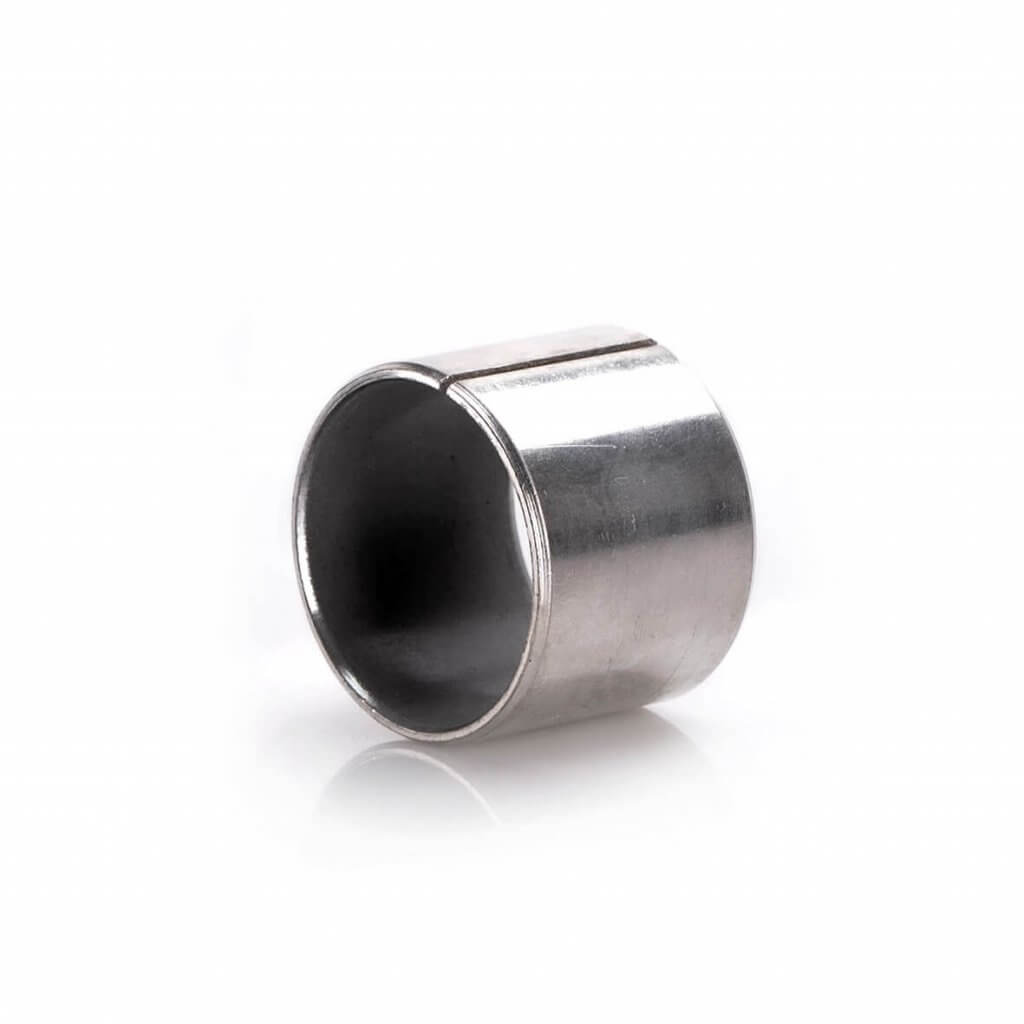
The fundamental working principle of self-lubricating bearings is: during the initial run-in phase, the solid lubricant on the bearing surface (such as PTFE) forms a transfer film through repeated friction with the shaft, which gradually adheres to the mating surface (the shaft), forming a solid lubricating film that achieves the self-lubricating effect.
This solid lubricating film effectively eliminates direct contact between the self-lubricating bearing and the mating component, providing excellent protection for the shaft and significantly extending the service life of both the bearing and the component. This self-lubricating property removes the need for external lubrication, making self-lubricating bearings particularly suitable for applications where maintenance and lubrication are difficult to perform.
In general, lubricants can be either liquid (oil) or solid (graphite, MoS₂, lead), depending on the lubricant's performance under specific conditions (such as temperature). Depending on the material design, lubricant is released to the bearing surface through the pores in the sliding layer, providing continuous lubrication.
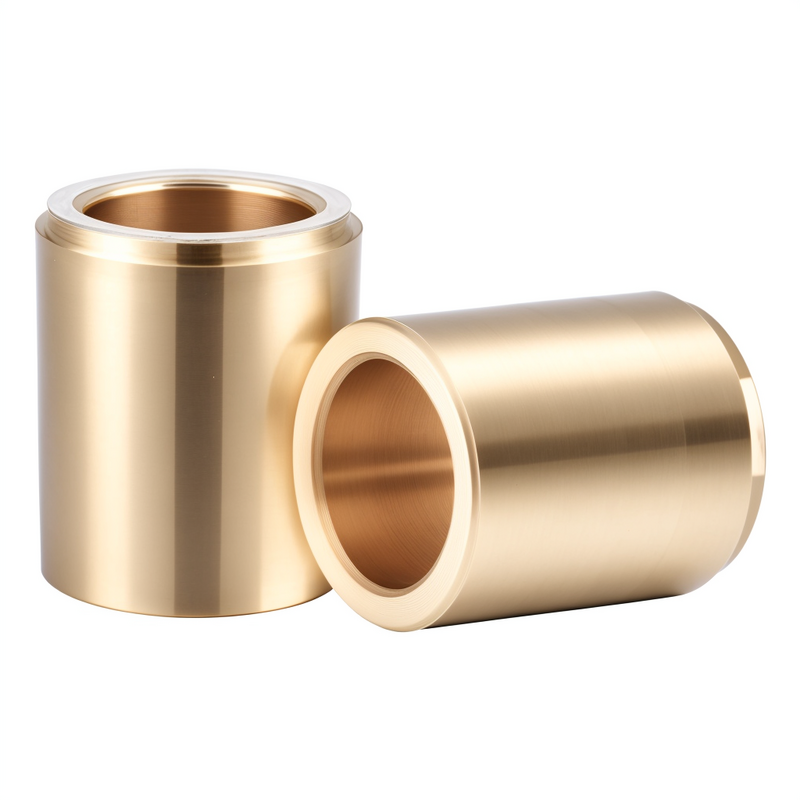
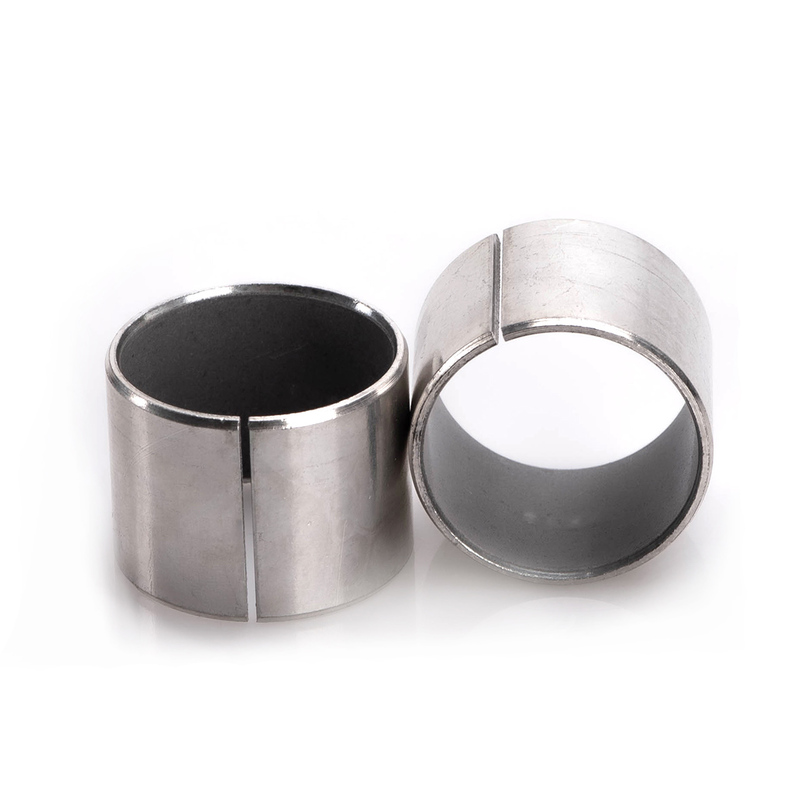
Self-lubricating bearings are typically hollow cylinders with thin walls, resembling a garment sleeve — low manufacturing cost and easy to install and maintain. Based on geometry, they are primarily classified into the following four forms:
Features a solid, one-piece construction in a simple cylindrical shape. The simplest and most basic form, suitable for general rotational and reciprocating motion applications.
.jpg)
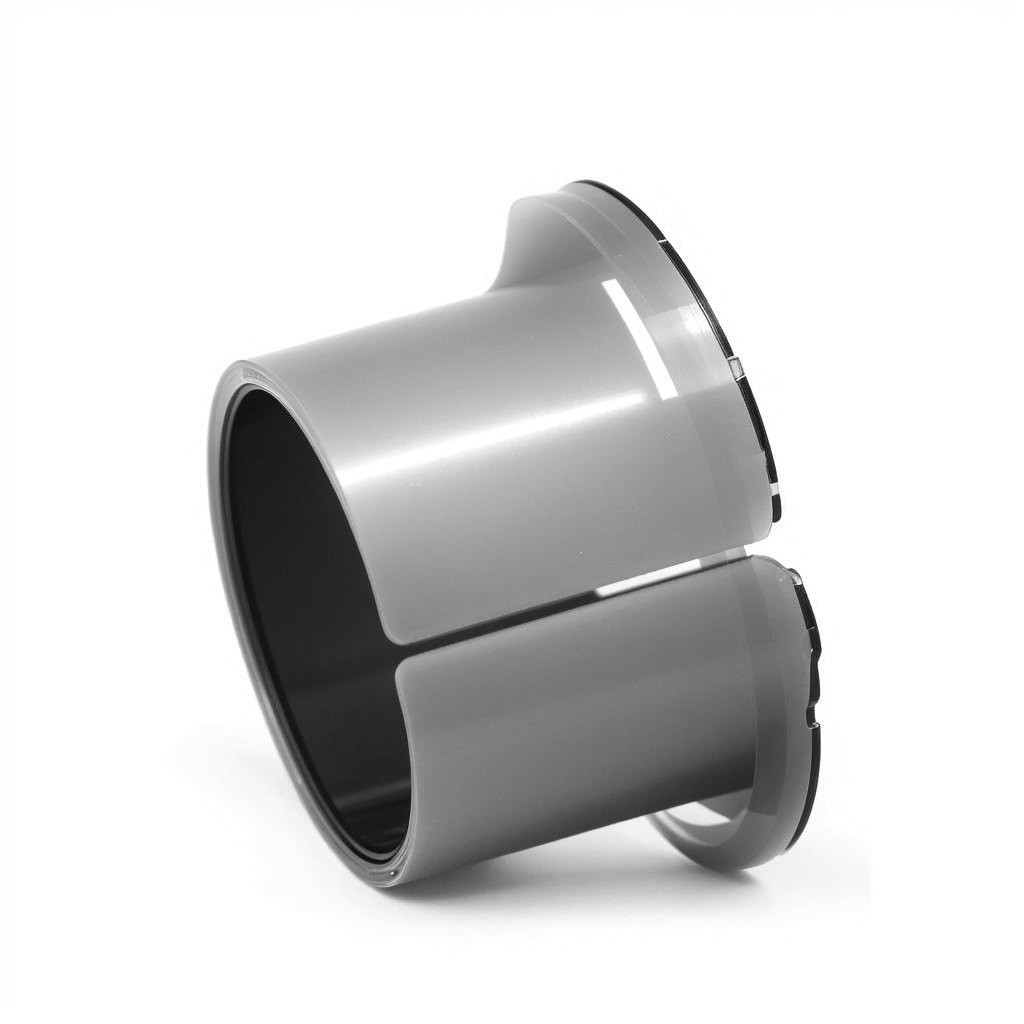
Composed of two halves that can be easily assembled and disassembled — ideal for applications with limited installation space or where the shaft cannot be removed.
Features an expanded flange at one end that provides axial stability, preventing the sleeve from shifting axially within the housing.
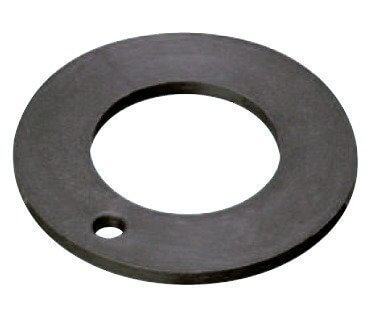
A flat disc-shaped design used to support axial loads, typically used in conjunction with radial sleeve bearings.
Self-lubricating bearings are suitable for three motion types: rotational motion, linear (reciprocating) motion, and high-frequency oscillation. Note that straight (cylindrical) sleeves can only carry radial loads; a flanged bearing or thrust washer should be selected when axial support is required.
The overall material of self-lubricating bearings (including the steel backing and internal sliding layer) is classified into the following main types based on application requirements:
| Material Type | Applicable Conditions | Representative Model |
|---|---|---|
| PTFE Composite (DU) | Dry-run operation, wide temperature range (-195°C to +270°C), maintenance-free | SF-1 / DU Series |
| POM Composite (DX) | Boundary lubrication, high load / low speed, frequent start-stop cycles | DX Series |
| Bimetal (Low-Carbon Steel + Sintered Bronze) | High speed, impact loads, truck chassis, agricultural machinery | Bimetal Series |
| Bronze Wrapped | High density and load capacity, lubricated conditions, construction machinery, machine tools | Bronze Wrapped Series |
| Solid Lubricant Embedded (Bronze + Graphite) | Very low speed, high load, frequent starts with completely oil-free operation (e.g., dam gates, hydraulic structures) | Solid Lubricant Series |
| Plastic (PTFE / PA) | Light loads, chemical resistance, moderate speeds | — |
| Solid Bronze / Soft Metal | Low to medium loads, requires external lubrication | — |
Self-lubricating bearings are found in virtually any pivot point involving rotational, reciprocating, or oscillating motion. Industries served include:
| Industry | Typical Application Areas |
|---|---|
| Automotive | Engine components, suspension systems, steering linkages, seat adjustment mechanisms, hinges, transmission shafts, connecting rods, pivot pins |
| Industrial Machinery | Conveyors, pumps, fans, compressors, plastic molding machines |
| Home Appliances | Electric motors, power tools, rotating components in various household appliances |
| Fitness Equipment | Rotational and reciprocating pivot points in various exercise machines |
| Agricultural Machinery | Linkage assemblies, steering gears, various articulated joints in farm equipment |
| Food Industry | Lifting and tilting equipment (oil-free design meets hygiene requirements) |
| Aerospace | Landing gear systems, actuators, control surfaces |
| Marine | Propeller shafts, rudder systems |
| Hydraulic Structures | Dam gates, hydraulic machinery (using solid lubricant embedded type) |
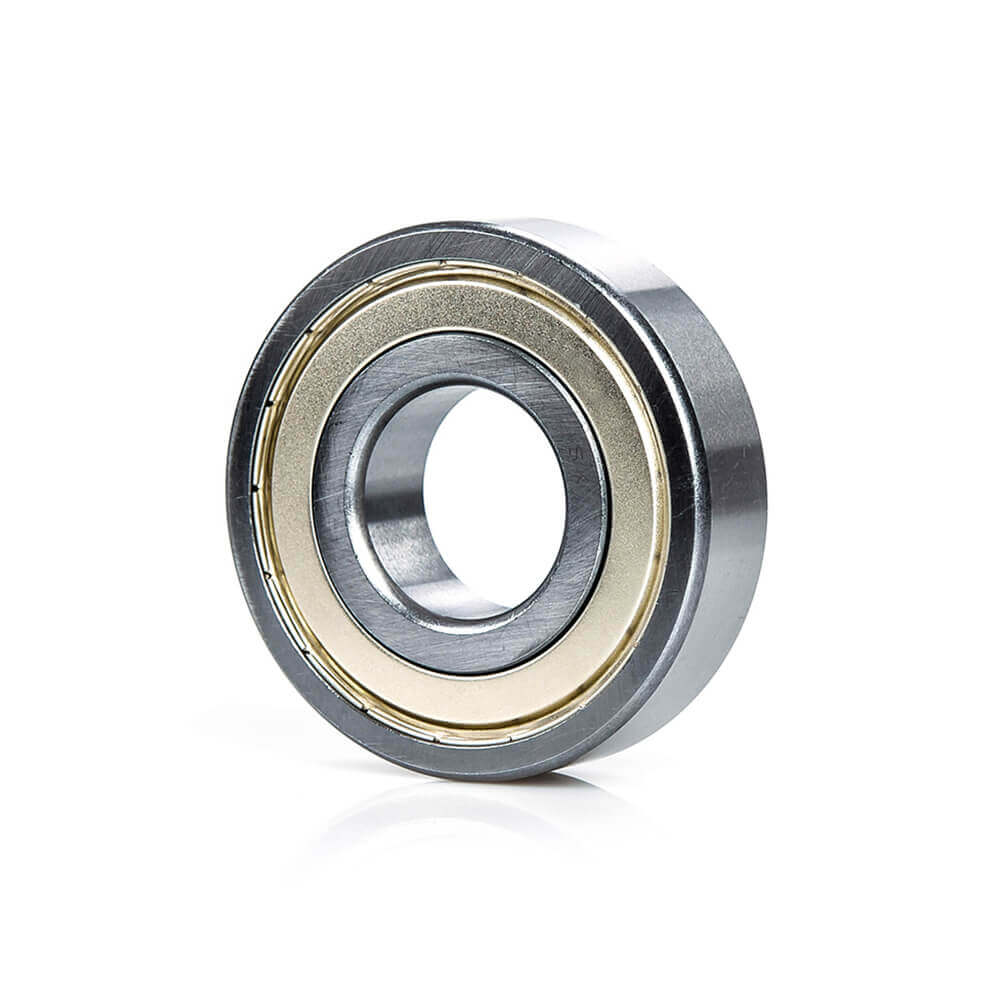
| Comparison Criteria | Self-Lubricating Bearing (Sliding) | Ball Bearing (Rolling) |
|---|---|---|
| Motion Type | Relies on sliding | Relies on rolling |
| Maintenance Requirement | Self-lubricating, typically maintenance-free | Requires periodic lubrication |
| Speed Range | Low to medium speed applications | Suited for high-speed operation |
| Structural Complexity | Single-piece cylindrical sleeve — simple and compact | Contains inner ring, outer ring, balls, and cage — more complex |
| Cost & Installation Space | Low cost, minimal space required | Higher cost, requires larger installation space |
When selecting a self-lubricating bearing, the following five dimensions should be evaluated as a priority:
SF-1 self-lubricating bearings are widely used in hydraulic vehicles, automobiles, motorcycles, agricultural machinery, textile machinery, printing machinery, and fitness equipment. A selection of model numbers is listed below for reference:
| Bearing No. | d (mm) | D (mm) | L (mm) |
|---|---|---|---|
| 0606 | 6 | 8 | 6 |
| 0608 | 6 | 8 | 8 |
| 0610 | 6 | 8 | 10 |
| 0806 | 8 | 10 | 6 |
| 0808 | 8 | 10 | 8 |
| 0810 | 8 | 10 | 10 |
| 0812 | 8 | 10 | 12 |
| 0815 | 8 | 10 | 15 |
| 1006 | 10 | 12 | 6 |
| 1008 | 10 | 12 | 8 |
| 1010 | 10 | 12 | 10 |
| 1012 | 10 | 12 | 12 |
| 1015 | 10 | 12 | 15 |
| 1020 | 10 | 12 | 20 |
| 1206 | 12 | 14 | 6 |
Only a partial list of self-lubricating bearing specifications is shown above. For a complete listing, please visit the page below:
A self-lubricating bearing works by sliding and is typically maintenance-free, with a simple, compact structure, lower cost, and minimal space needs—ideal for low-to-medium-speed use. A ball bearing works by rolling and suits high-speed operation but needs periodic lubrication and more installation space. Start with speed and maintenance access: high speed favors ball bearings; low-to-medium speed with limited re-oiling access favors self-lubricating bearings. Final choice still depends on load, PV value, and environment.
DU bearings, SF-1, oilless bearings, dry bearings, sleeve bearings, plain bearings, and bushings are often used interchangeably, all pointing to sliding bearings that run on their material's self-lubricating properties. Note one caveat: "bushing" sometimes also refers to non-self-lubricating solid metal sleeves (such as plain bronze). When purchasing, confirm whether the material spec includes a self-lubricating layer like PTFE, POM, or graphite to avoid confusing identical names with different materials.
The PV value (pressure × velocity) is the most critical combined selection metric for a self-lubricating bearing, reflecting the real operating intensity from the interaction of load and speed. Once the PV value exceeds the material limit, the transfer film cannot form stably, leading to rapid wear or even failure. So you can't look at load or speed alone—evaluate their product together with operating temperature and environmental media to judge whether a given material truly holds up in the field.
Common self-lubricating bearing materials suit different conditions: PTFE composite (DU/SF-1) fits dry running, a wide temperature range (-195°C to +270°C), and maintenance-free use; POM composite (DX) fits boundary lubrication, high load at low speed, and frequent start-stop; bimetal fits high speed and shock loads; solid-lubricant-embedded types (bronze + graphite) fit extremely low speed, high load, and fully oil-free hydraulic equipment. For final selection, provide load, speed, temperature, and environmental conditions together.
When requesting a quote for self-lubricating bearings, provide the three basic dimensions—shaft diameter d, outer diameter D, and length L—plus the application, maximum load, running speed, operating temperature, whether a split or flange is needed, whether secondary machining is required, and estimated annual volume. If you already have an existing model (such as the SF-1 series), a drawing, or a sample, share those to speed up spec assessment. The more complete the data, the better we can help evaluate the most suitable material and structural form.
Please provide your question. We’ll find you with the best support options.