
Need Support?
Please provide your question. We’ll find you with the best support options.

Instead of only listing a few major bearing categories, a more practical way is to understand bearing types by structure, material, motion type, and application.
ISK Bearings currently offers product categories including Deep Groove Ball Bearings, Ceramic Bearings/Engineered Plastic Bearings, Needle Roller Bearings, Special and Customized Bearings, Tapered Roller Bearings, Rod End Bearings, Bushing Bearings, Linear Bearings, and Bicycle Bearings. The following guide explains each bearing type in more detail.
Quick guide: If you simply want to know what types of bearings are available, start with the overview table below.
If you are looking for bearings for a specific machine or equipment, it is better to compare them by application and working environment.
| Bearing Type | Main Features | Common Applications | Related Products |
|---|---|---|---|
| Deep Groove Ball Bearings | High-speed rotation, low-friction torque, low vibration, and low noise | Motors, home appliances, automotive applications, and industrial machinery | Deep Groove Ball Bearings, Miniature Bearings, Thin Section Bearings, Inch Bearings |
| Thrust Ball Bearings | Designed to withstand axial loads | Rotating mechanisms, equipment requiring axial support, automotive steering systems, machine tool spindles, generators, and compressors | Thrust Ball Bearings |
| Needle Roller Bearings | Small cross-section, compact size, and high load capacity; especially suitable for designs with limited radial installation space | Automotive, motorcycles, printing machinery, industrial robots, and construction equipment | TA, HK/SCE, HF, NK, NA/RNA, AXK, KT, CF series |
| Tapered Roller Bearings | Can withstand combined radial and axial loads | Automotive, metallurgy, steel equipment, gear units, paper machinery, and motorcycles | Metric system, including imperial units |
| Ceramic Bearings | Lightweight, high wear resistance, low friction, anti-magnetic electrical insulation, and high/low temperature resistance | Precision applications, corrosion-resistant environments, and special operating conditions | Full Ceramic Bearings, Hybrid Ceramic Bearings |
| Engineered Plastic Bearings | Suitable for different materials and operating environments | Precision, corrosion-resistant, and oil-free lubrication environments | POM, PTFE, PEEK, and other engineered plastic materials |
| Rod End Bearings | Good wear resistance, suitable for alternating and impact loads | Production machinery and construction machinery | RBH, GE, PHS, POS |
| Bushing Bearings | Oil-free lubrication or minimal lubrication, suitable for applications where maintenance is difficult | Equipment that is difficult to maintain or requires reduced oil supply | SF-1 Bushes |
| Linear Bearings | Used for linear motion, with low friction, high accuracy, low noise, and high rigidity | Linear motion systems and automation equipment | LM-UU, LM-LUU, LME-LUU |
| Special and Customized Bearings | Designed according to specific application requirements | High temperature, corrosion, coating, and special equipment applications | Stainless Steel Bearings, Coating Bearings, Customized Bearings, High Temperature Bearings, Forklift Mast Bearings |
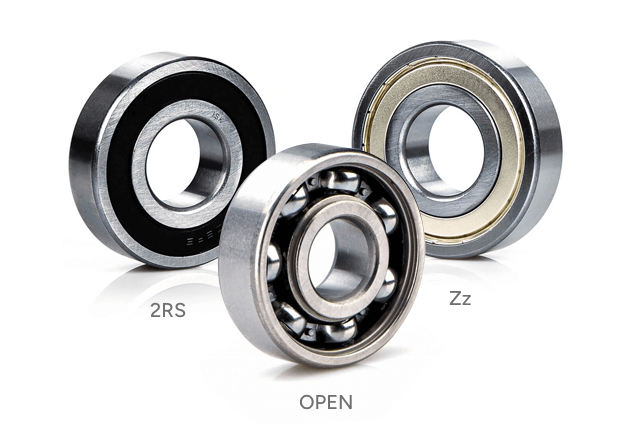
Deep Groove Ball Bearings are a common type of ball bearing, widely used in applications that require high-speed rotation, low-friction torque, low vibration, and low noise.
They are easy to install and require less maintenance than other bearing types.
In the ISK Bearings product categories, the Ball Bearings series includes Deep Groove Ball Bearings, Miniature Bearings, Thin Section Bearings, Thrust Ball Bearings, and Inch Bearings.
If your equipment requires high-speed rotation, low noise, or standardized bearing sizes, this category is a good starting point.
.jpg)
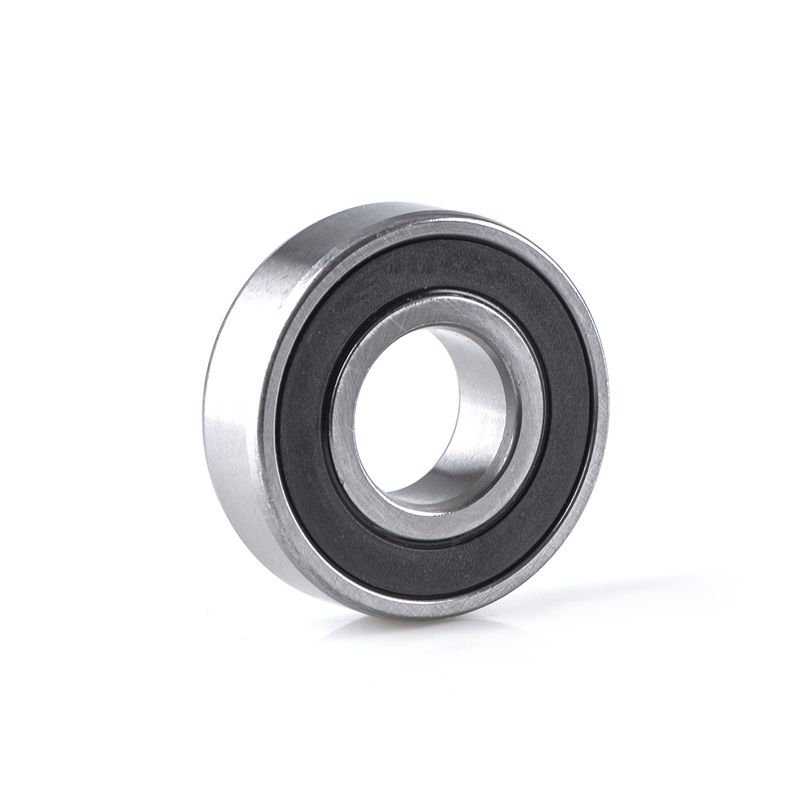
Miniature Bearings belong to the Ball Bearings series.
Miniature bearings are smaller than standard ball bearings. They refer to bearings with bore diameter d less than 10 mm, with outer diameters ranging from 1 mm to 30 mm. They include an outer ring, inner ring, ball set, and cage, and are designed to provide smooth, low-friction motion.
.jpg)
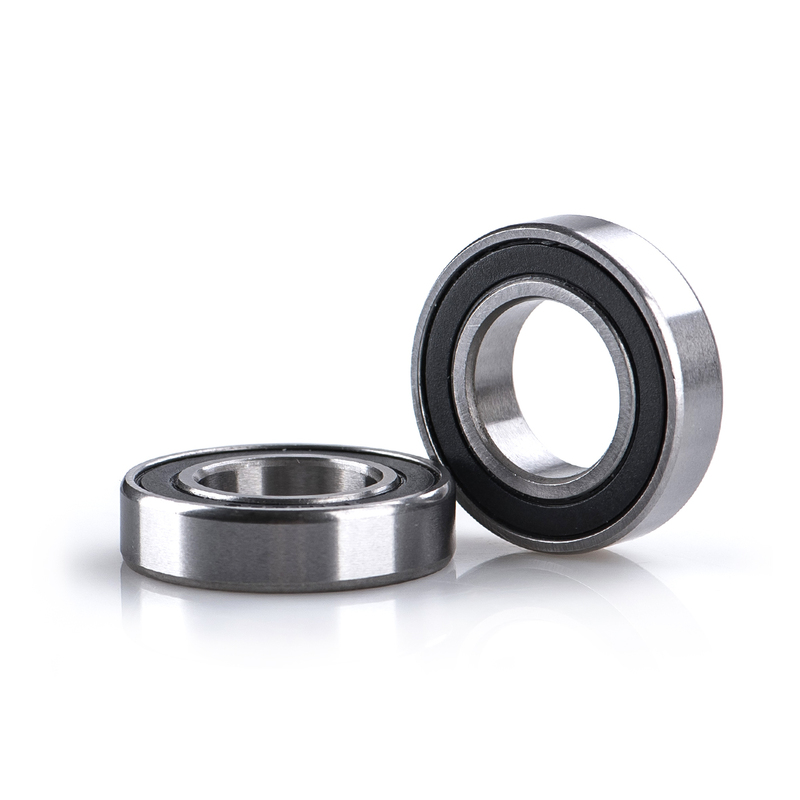
Thin Section Bearings belong to the Ball Bearings series.
Thin section ball bearings differ from conventional deep groove ball bearings in that the cross-section of each series is designed as a fixed size and does not increase as the bore diameter increases.
To withstand different types of loads, thin section ball bearings are available in three types: radial contact (L type), angular contact (M type), and four-point contact (N type).
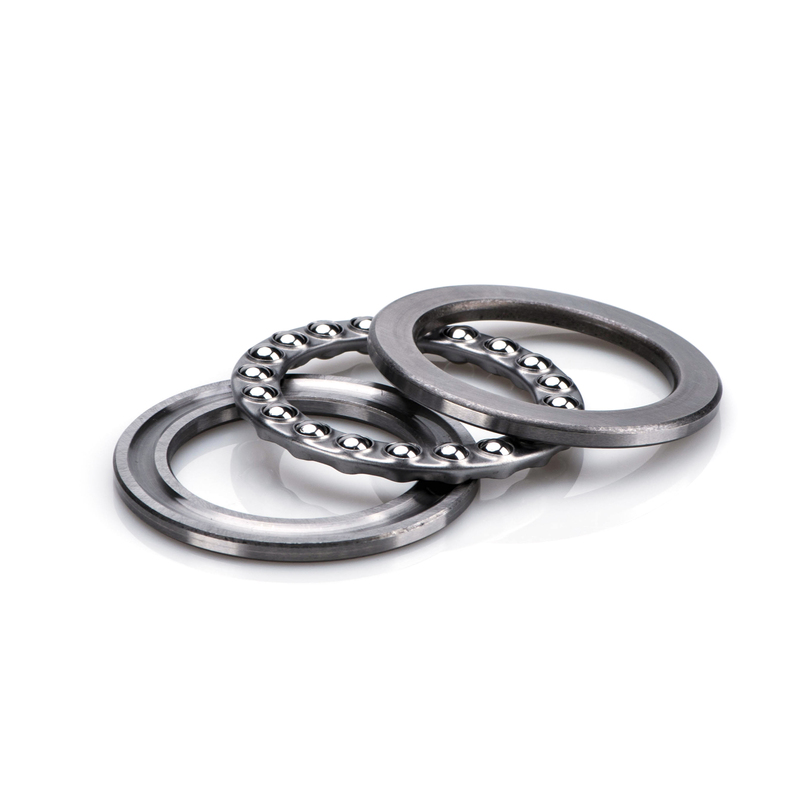
Thrust ball bearings generally consist of two or more thrust washers and several rolling elements. The thrust washers are usually divided into shaft washers and housing washers, while the rolling elements are commonly assembled as a complete unit with steel or brass cages.
They are divided into single-direction and double-direction types. The former can withstand axial loads in one direction, while the latter can withstand axial loads in both directions. However, both types generally cannot withstand radial loads and are not suitable for high-speed rotation. Bearings with spherical mounting surfaces on the housing washer, such as self-aligning seat washer types or bearings with self-aligning washers, have self-aligning capability and can reduce the effect of installation errors.
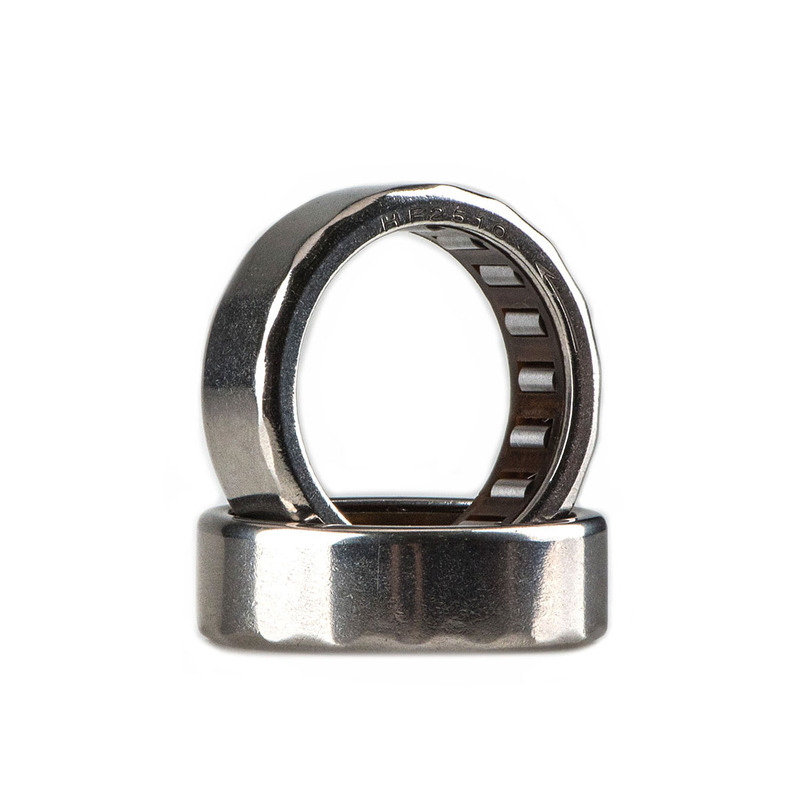
Needle Roller Bearings, also known as needle bearings, feature slender needle-shaped rollers.
Compared with ball bearings, needle roller bearings have a smaller cross-section and more compact size, while offering higher load capacity. They are suitable for components with limited space.
Needle roller bearings are commonly used in automotive applications, motorcycles, printing machinery, industrial robots, and construction equipment.
 Demystifying Needle Bearing Size Chart: Your Go-To Reference for Dimensional Specifications
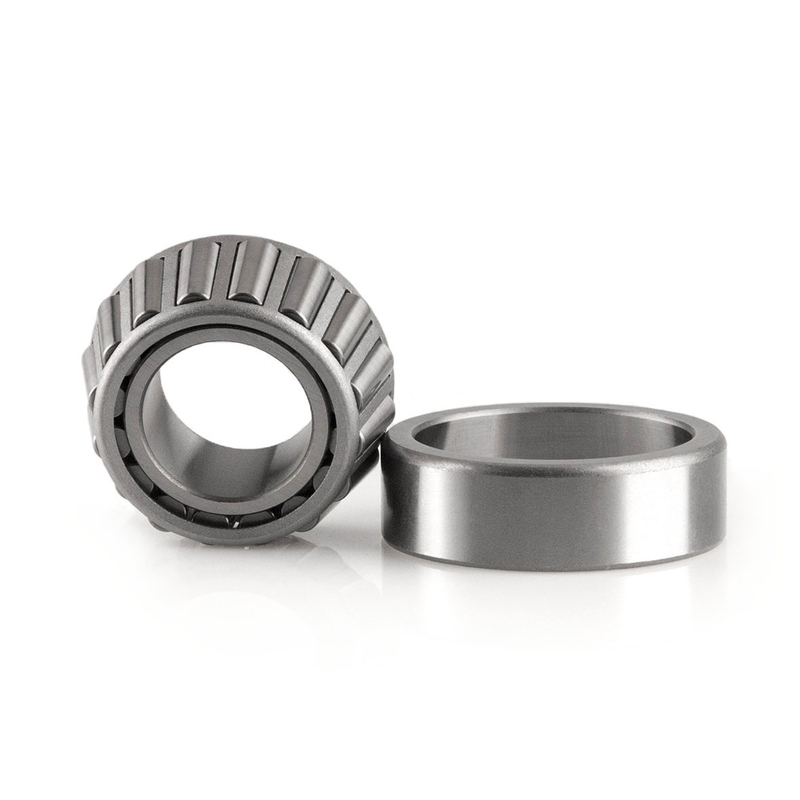
Tapered Roller Bearings can withstand combined radial and axial loads.
The larger the raceway angle, the greater the load-carrying capacity.
Tapered roller bearings can be used in automotive applications, metallurgy, steel equipment, gear units, paper machinery, motorcycles, and other industries.
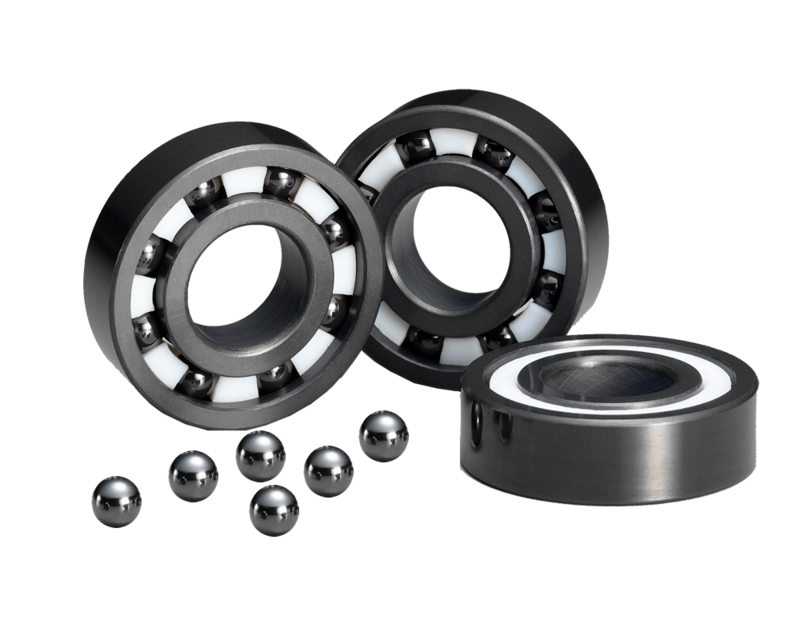
Ceramic Bearings are lightweight, highly wear-resistant, and low in friction.
This category includes Full Ceramic Bearings and Hybrid Ceramic Bearings.
If the operating environment involves precision, corrosion resistance, or special conditions, Ceramic Bearings can be compared with bearings made from other materials.
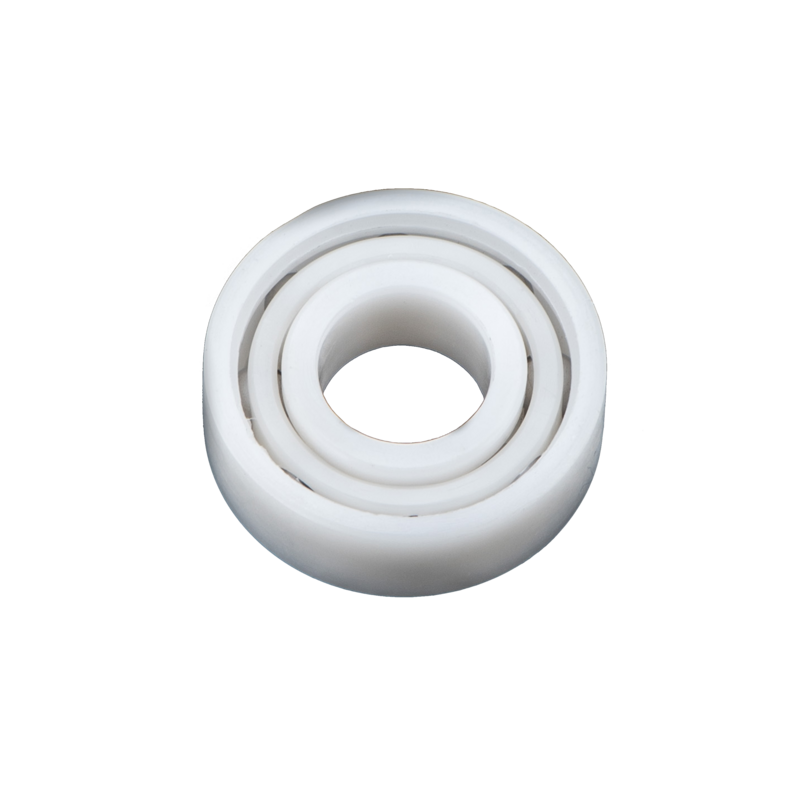
Engineered Plastic Bearings can be used in different environments according to material characteristics.
POM (polyoxymethylene) and PA (nylon) have good mechanical strength and wear resistance, making them suitable for general mechanical operation. PP (polypropylene), HDPE (high-density polyethylene), and UPE (ultra-high molecular weight polyethylene) are suitable for most acid and alkaline environments and provide oil-free self-lubricating properties.
PTFE (polytetrafluoroethylene) and PVDF (polyvinylidene fluoride) offer strong chemical corrosion resistance. Among them, PTFE has a low coefficient of friction and good electrical insulation, while PVDF can be used at approximately -60℃ to +150℃.
For high temperature or more demanding operating conditions, PEEK (polyether ether ketone) and PI (polyimide) are higher-level options, with long-term temperature resistance of approximately 260℃ and 300℃ respectively.
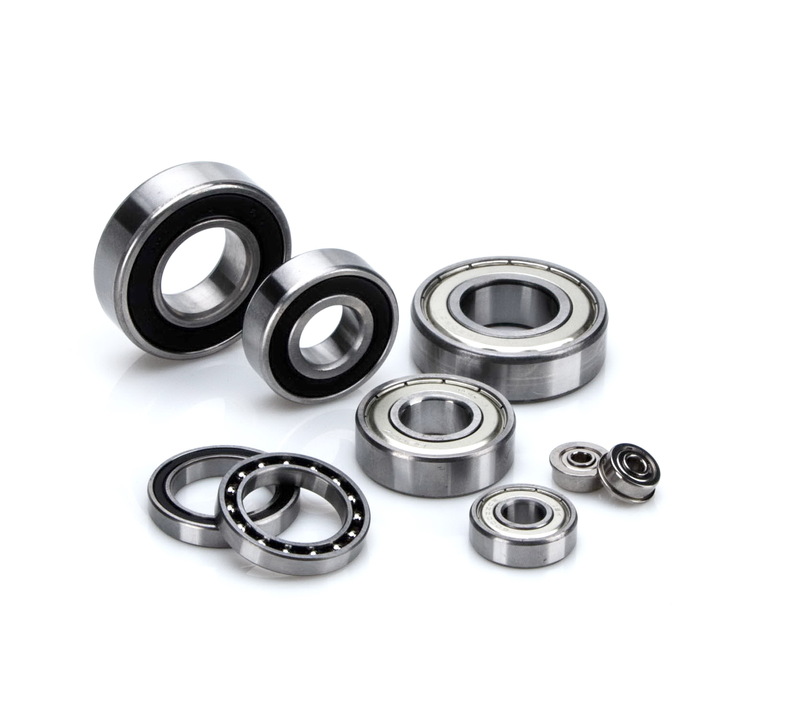
Special and Customized Bearings can be designed according to customers' specific application requirements.
This category includes Stainless Steel Bearings, Coating Bearings, Customized Bearings, High Temperature Bearings, and Forklift Mast Bearings.
If standard bearings cannot meet equipment requirements, or if the operating environment involves high temperature, corrosion, special surface treatment, or special dimensions, this category can be further reviewed.
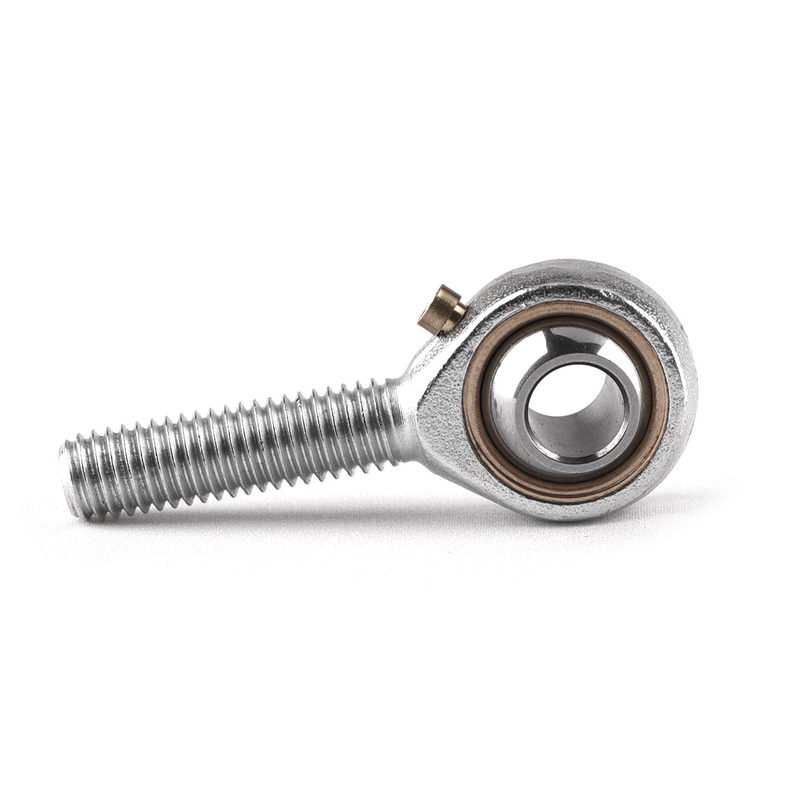
Rod End Bearings are spherical plain bearings known for good wear resistance.
They are especially suitable for working conditions involving alternating and impact loads. They can withstand large radial loads and axial loads from any direction, making them suitable for production machinery and construction machinery.
The Rod End Bearings series includes RBH, GE, PHS, and POS.
.jpg)
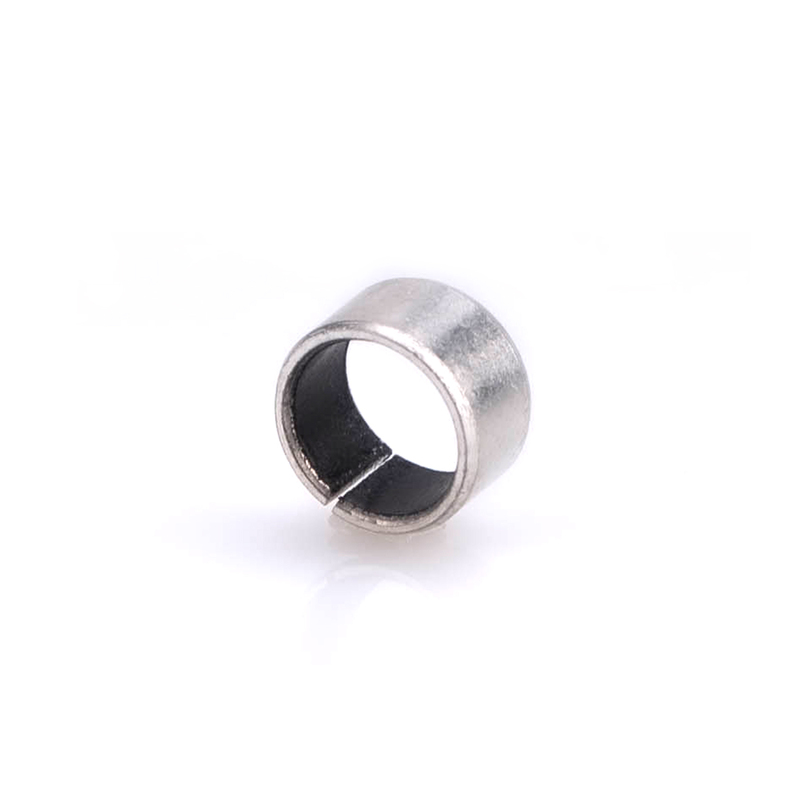
Bushing Bearings can provide oil-free lubrication, maintenance-free operation, or minimal lubrication, making them suitable for applications where maintenance is difficult.
Bushing Bearings can reduce maintenance frequency, reduce overall volume, and save space.
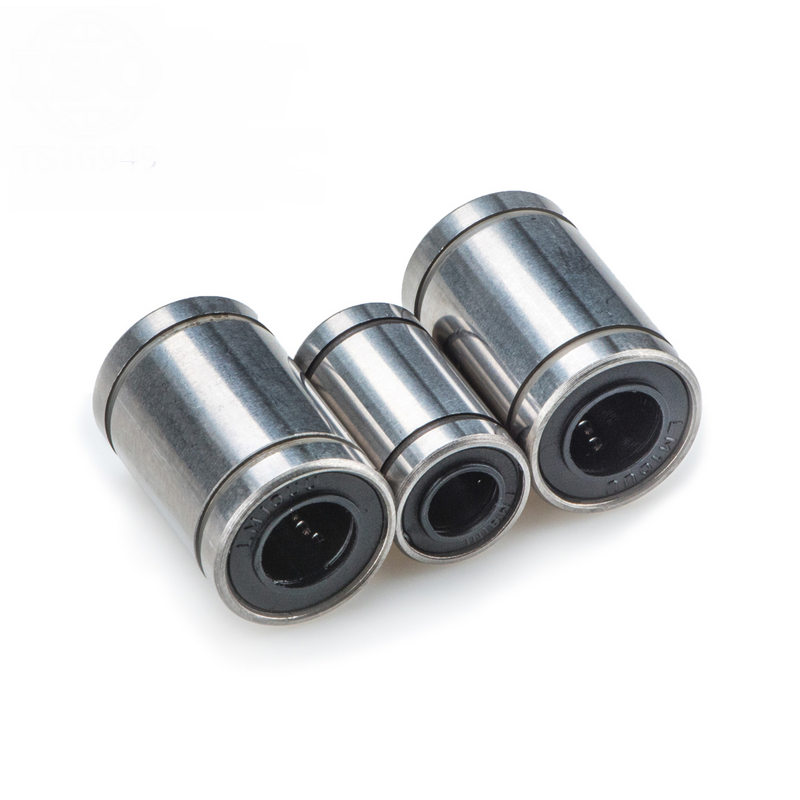
Linear Bearings are used in linear motion systems. A linear bearing is a linear motion mechanism in which steel balls enable rotational movement, providing small friction and relative stability while maintaining high accuracy, low noise, and high rigidity even under heavy load.
The Linear Bearings series includes LM-UU, LM-LUU, and LME-LUU.
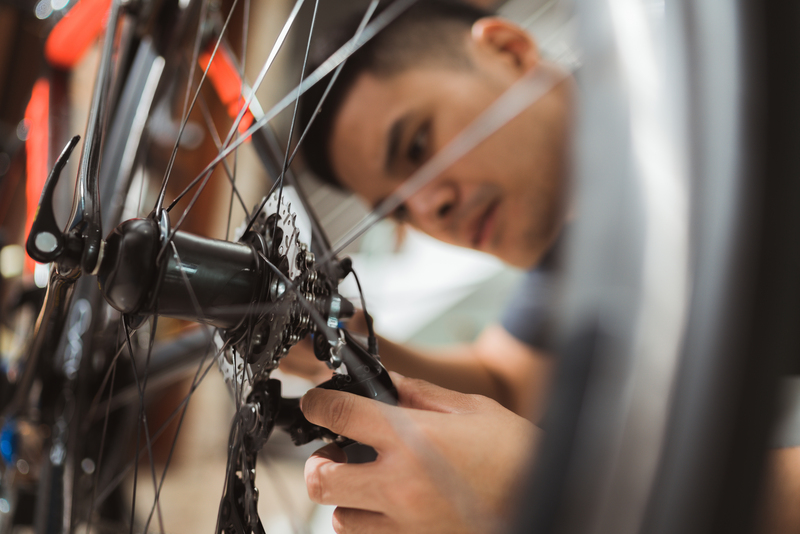
Bicycle Bearings are bearings categorized by application.
This category includes Bottom Bracket Bearings, Hub Bearings, Pedal Bearings, Headset Bearings, Pulley Bearings, Pivot Bearings, and E-Bike / Motor Bearings.
If you already know where the bearing is installed on a bicycle, you can look for the corresponding bearing by the component name.
Please provide your question. We’ll find you with the best support options.