
Need Support?
Please provide your question. We’ll find you with the best support options.

ISK Bearings | B2B Bearing Procurement
Table of Contents
- What Is a Bearing?
- What Problems Can Improper Installation Cause?
- Six Key Points to Verify Before Installation
- How to Install Bearings: Press Fit vs. Shrink Fit Methods Compared
- Mounting Tool Selection for Cylindrical Bore Bearings
- Correct and Safe Bearing Installation Steps
- Key Installation Precautions
- Frequently Asked Questions (FAQ)
A bearing is a mechanical element designed to support a rotating shaft and allow it to rotate freely. Bearings are engineered to reduce friction, thereby improving operational efficiency and extending equipment service life.
Before learning how to install bearings, understanding what can go wrong with improper installation helps establish proper risk awareness during operation. The following are common consequences of installation errors:
Before proceeding with installation, complete the following checks to ensure a correct and reliable mounting:
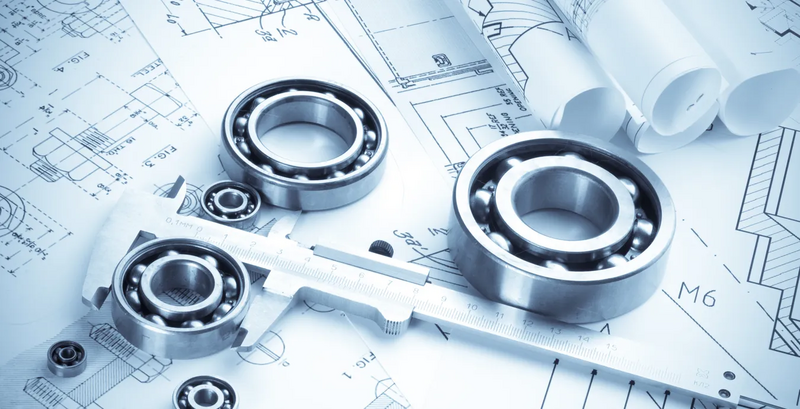
Before installation, confirm that the bearing dimensions match the requirements of the bearing housing and shaft. Also verify that the machined shaft and housing have perpendicular contact surfaces to ensure adequate fit.
 Further Reading: Bearing Dimension Reference | How to Read a Bearing Specification Sheet
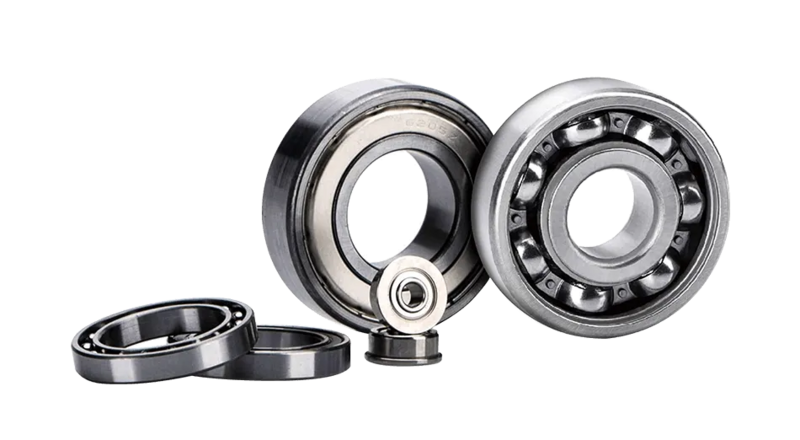
Inspect the fine details of the bearing body and check the mating surfaces for scratches, dust, or casting residue. If necessary, use an oilstone or a clean cloth to address any surface imperfections.
When installing the bearing into the housing, ensure that forces are applied correctly to the outer ring. Never mount or strike the outer ring directly, as this may cause raceway damage, generate abnormal noise, and impair the bearing's load-bearing capacity.
Why Is My Bearing Making Abnormal Noise?
The installation method depends on the bearing type and fit type. Since bearings are typically used on rotating shafts, the inner ring generally requires a tight fit. Bearings with a cylindrical bore are typically mounted onto the shaft using a press fit or by heating to expand the inner diameter (shrink fit). Bearings are usually installed into the housing with a clearance fit; however, when an interference fit is required for the outer ring, a press fit may also be used. In some cases, the bearing can first be cooled with dry ice to reduce its dimensions before interference fitting. In this case, anti-rust treatment must be applied beforehand, as moisture in the air will condense on the bearing surface.
When installing the inner and outer rings simultaneously, a mounting plate must be used to apply even pressure to both rings at the same time. Applying force only to the inner ring may cause the balls to press against the outer ring, resulting in scoring on the raceway surface.
Following the correct and safe procedure, complete the final assembly of the rolling bearing. Verify that the bearing is seated firmly against the shaft shoulder with no gap present.
The installation method of a bearing depends primarily on the bearing type and fit type. Since bearings are typically used on rotating shafts, the inner ring requires a tight fit. The following provides an explanation and comparison of the two primary installation methods:
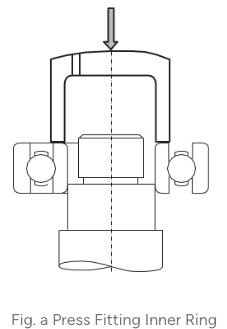
Press fitting is widely used for small bearings. As shown in the diagram, the mounting tool is placed on the inner ring, and pressure is applied to slowly press the bearing onto the shaft until one side of the inner ring seats firmly against the shaft shoulder.
For press fit installation, the mounting tool must never be placed on the outer ring, as this may damage the bearing.
Before installation, it is recommended to apply oil to the mating shaft surface to facilitate smooth insertion.
The hammer installation method should only be used for small ball bearings with a loose fit and only when no press is available. This method should not be used for tight fits or for medium and large bearings.
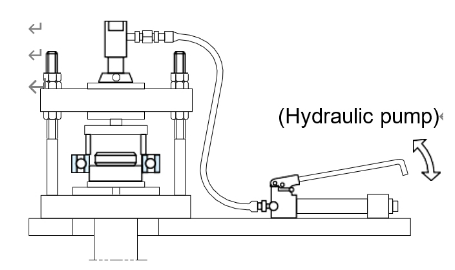
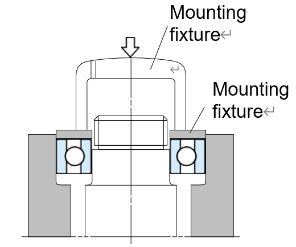
For non-separable bearings (such as deep groove ball bearings), when both the inner and outer rings require a tight fit, the mounting tool must be placed on both rings simultaneously, and a bolt or hydraulic press must be used to install both rings at the same time. Since the outer ring of a self-aligning ball bearing may deflect, a dedicated mounting tool must be used during installation.
Since press fitting large bearings requires considerable force, shrink fitting is widely used for large bearings. The bearing is first heated until it expands and then mounted. This method prevents excessive force from being applied to the bearing and allows installation to be completed in a short time.
 For high-temperature bearings, please refer to this page.
| Comparison | Press Fit | Shrink Fit |
|---|---|---|
| Applicable Bearing Size | Primarily small bearings | Medium to large bearings |
| Operating Principle | Apply force to press the bearing onto the shaft | Heat the bearing to expand it; it locks in place upon cooling |
| Temperature Limit | No specific heating requirement | Maximum heating temperature: 120°C |
| Common Tools | Press (most common), nut and bolt, hammer | Oil bath, wire mesh, positioning tool |
| Key Advantages | Fast operation, minimal equipment required | Minimal force on the bearing, high installation efficiency |
| Precautions | Hammer method limited to small ball bearings with a loose fit | Immediate positioning required after installation to prevent gaps from thermal contraction |
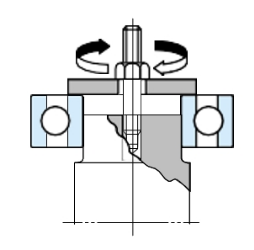
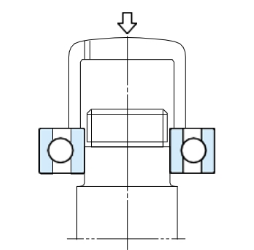

During bearing installation and removal, use purpose-designed tools to prevent damage. Never use improper tools (such as a brass drift), as these may cause deformation, damage to the rolling elements, or even complete bearing failure. The most common installation method uses a mounting sleeve and hammer — always ensure the sleeve is properly centered and strike gently with the hammer to avoid misalignment or bearing damage.

Before installation, inspect used bearings to check for burrs, scratches, or cracks on the ball or roller surfaces. For new bearings, verify that the part number is correct and that the radial clearance meets industry standards.
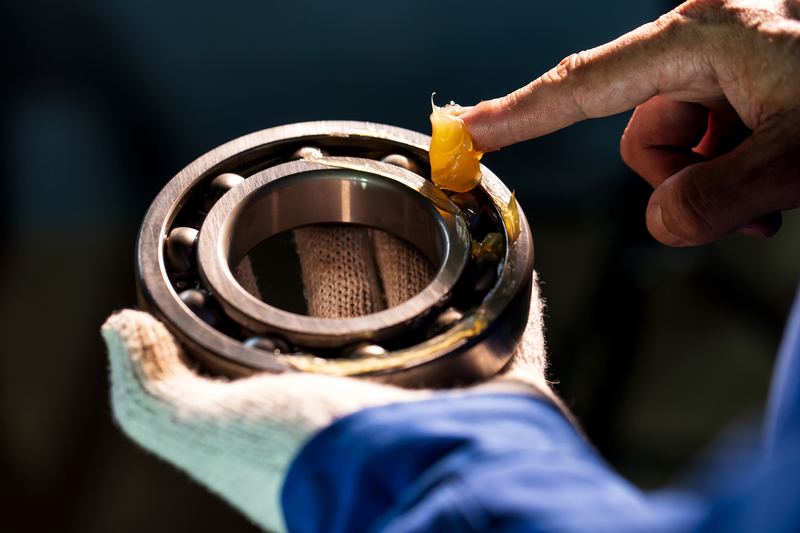
Avoid overfilling the bearing and its bearing cavity with lubricant, as this may cause the rolling elements to skid and result in poor lubrication conditions. Determine the appropriate lubricant volume for the bearing cavity based on guidelines such as motor speed.
Choose the Right Bearing Grease for Your Application
By following the steps above, you can ensure that the bearing is installed correctly and reliably on the shaft.
 Principle of Uniform Force Application
Regardless of the installation method used, force must be applied evenly to the bearing. To achieve this, it is recommended to use a jig and install the bearing gently.
When press-fitting the inner ring, never apply the jig to the outer ring, and vice versa.
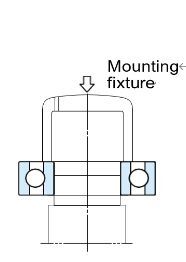
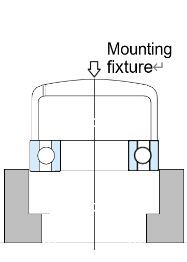
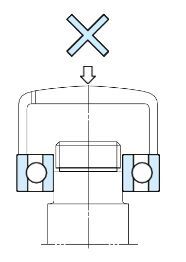
When both the inner and outer rings of a non-separable bearing require an interference fit, use two separate jigs and press the bearing in gently, as the rolling elements are susceptible to damage.
Further Reading: How to Install Thrust Bearings
Please provide your question. We’ll find you with the best support options.