
Need Support?
Please provide your question. We’ll find you with the best support options.

目錄
1.Does Switching to Ceramic Actually Feel Different?
2.How Does a Bike Shop Decide Whether a Customer Should Upgrade?
3.How Should Sealing and Lubrication Be Matched?
4.Which Type Suits Hubs, Bottom Brackets, and Derailleur Pulleys?
In a steel ball bearing, both the rolling elements and the inner and outer rings are made of high-carbon chromium steel (GCr15) — impact-resistant and cost-effective. A hybrid ceramic bearing keeps the steel raceways but swaps in silicon nitride (Si₃N₄) ceramic balls, prized for their low density and high hardness. The real question isn't "which is better," but "which component, and what riding environment."
Switching to ceramic bearings doesn't always "feel different" — it depends on the component and riding conditions. Hybrid ceramic does have genuine physical advantages, but it isn't a cure-all. Silicon nitride ceramic balls have a density of roughly 3.2 g/cm³ — only about 40% of a steel ball's (~7.8 g/cm³) [to be confirmed] — so less mass means less centrifugal force at high rpm, most noticeable in a rear derailleur pulley where rotational speed changes constantly.
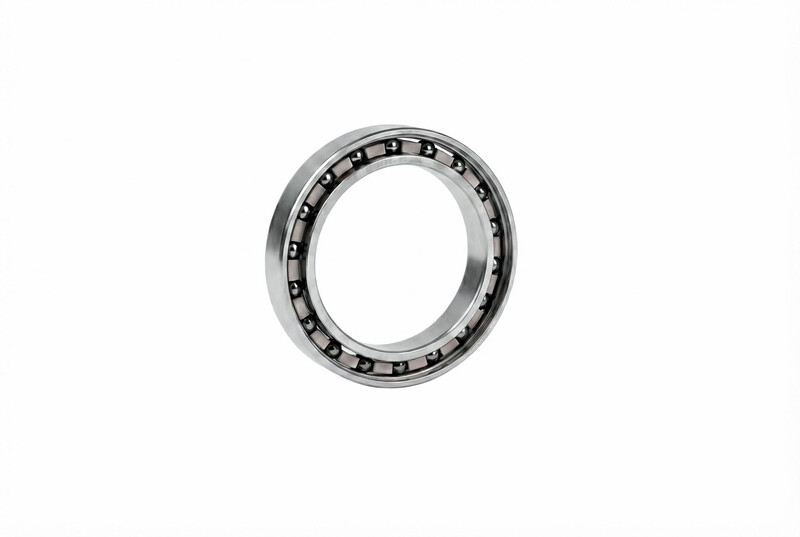
For most cyclists, the first encounter with "ceramic bearings" comes from spinning a hub by hand and feeling it's "not as smooth as someone else's," or hearing a gritty sound in the bottom bracket and a notchy feel underfoot — so "upgrade to ceramic" becomes an almost article-of-faith answer. But if you ride off-road, through mud, or in sandy conditions, ceramic's higher brittleness means lower tolerance to side impacts and point-contact debris than steel — and once a seal fails, damage can progress faster than with an all-steel bearing.
In other words: a smooth free spin ≠ a faster ride. The hand-spun smoothness of a hub and your actual efficiency climbing a hill are two different things.
A bike shop's first step isn't changing the material — it's confirming where the noise comes from. Noise isn't necessarily a bearing problem. A gritty sound in the bottom bracket may come from the press-fit condition, dried-out grease, or an improperly cleaned mounting surface, and swapping in ceramic bearings won't necessarily fix it.
In practice, the diagnostic order usually runs: first confirm the source of the noise (bearing, threads, hub ratchet, or frame interface) → check whether the seals have let in water or sand → then discuss whether a material change is even warranted. If the original steel ball bearing is simply suffering from aged grease or worn seals, re-servicing it or fitting a high-precision all-steel bearing is often more cost-effective than jumping straight to ceramic.
One point worth flagging for customers: ceramic balls are very hard. That means if the raceway (steel ring) isn't machined to sufficient precision, it's the raceway that wears — not the ball. In short, hybrid ceramic demands higher raceway precision, not lower. A cheap ceramic bearing with no matching upgrade to the steel ring may actually last less than a good all-steel bearing.
As for precision grades, Grade 3 offers a perceptible difference in quietness and initial smoothness, making it suitable for premium product lines that prioritize feel and brand image; under normal riding conditions, Grade 5 is already sufficient and offers better value.
Sealing determines a bearing's real-world lifespan yet is the detail most often skipped, and lubrication is a question of "what to use," not "oil or no oil." Both should be matched to the actual riding environment.
Seal choices:
.jpg)
the rubber lip contacts the inner ring directly, giving the best dust and water protection but adding a little friction. Suited to hubs and bottom brackets directly exposed to the elements.
.jpg)
a tiny gap keeps friction extremely low but protection weaker. Suited to derailleur pulleys, where low drag matters and the environment is relatively clean.
On lubrication, a common misconception is that "ceramic doesn't need lubrication" — that's wrong, because the raceways are still steel and an oil film is still needed to keep metal from contacting metal. What matters is what you use: a low-viscosity fully synthetic grease suits racing and road applications chasing low drag; a standard lithium-based grease offers better durability for commuting and all-weather hubs and bottom brackets.
Different components run at different speeds, loads, and environments, so the right bearing differs too. From a manufacturing and selection standpoint:
.webp)
moderate speed, durability first. Either hybrid ceramic (Grade 5) or high-precision all-steel works; on long rides, ceramic offers a thermal stability advantage.
.webp)
pedaling force transfers directly here, so it's the most sensitive to efficiency loss and the highest-ROI point to upgrade. Hybrid ceramic Grade 5 or Grade 3 is recommended.
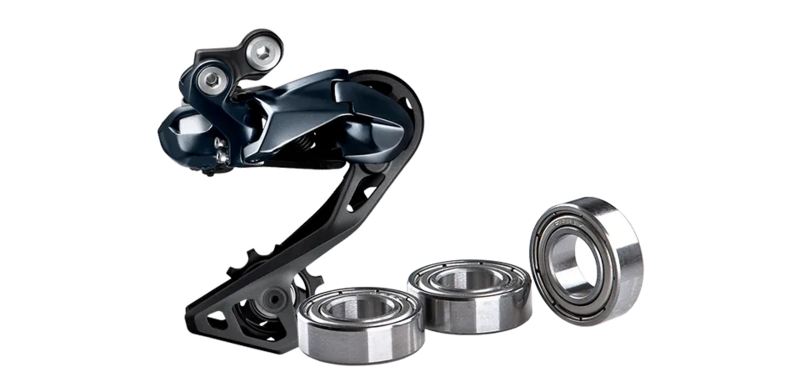
high speed, low load — this is where ceramic's low-density advantage shows most, and where the difference is most noticeable. Hybrid ceramic Grade 3 with non-contact seals is recommended.
For in-house brands and OEM developers, "use ceramic" is just one line on a spec sheet. What end users actually perceive as a "good bearing" is the combined result of four variables: material, steel ring precision, sealing, and lubrication. If any one of them isn't matched to the rest, that's exactly where warranty complaints emerge.
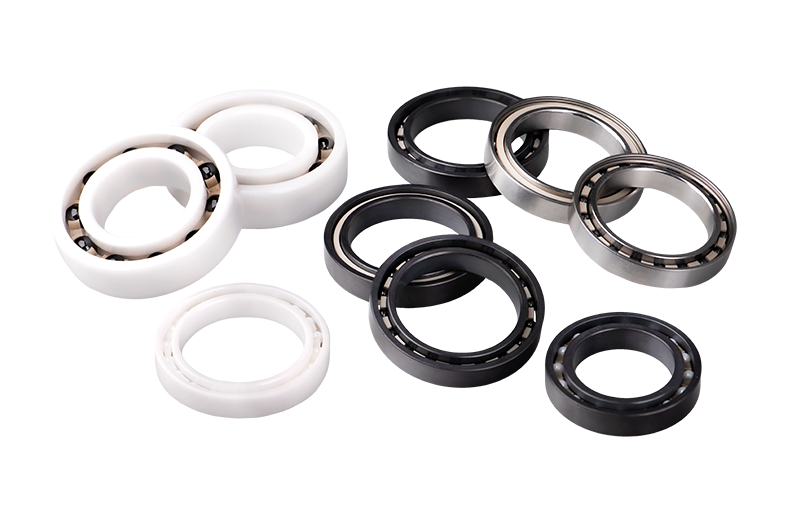
A common development pitfall is specifying only the ceramic ball grade without raising steel ring precision in step, or a seal configuration that doesn't match the actual riding environment — leading to post-shipment noise, water ingress, or shorter-than-expected life. It's also worth noting that in OEM partnerships, seal color and brand logo can usually be customized, which is part of product identity.
ISK Bearings is an integrated bearing solutions provider. Our value isn't just quoting a part number — it's working backward from your application to the right selection: whether a given component should use steel or hybrid ceramic, which precision grade the ceramic balls should fall into, whether the steel ring precision is matched, and how sealing and lubrication should align with your target market and riding environment.
If you're developing a bicycle product line, or evaluating an alternative to an existing bearing, we suggest providing: the application component, the target riding environment, the current part number or specification, drawings or samples, estimated quantities, and the problem you're currently facing (noise, water ingress, feel, lifespan, etc.). The more complete the information, the better we can help you decide the next step. Actual fit still needs to be confirmed against specifications, drawings, or samples.
Share your application and requirements to get a selection assessment and quote →
Not necessarily. Ceramic balls have a clear advantage in high-speed, low-load positions such as derailleur pulleys, but they're more brittle and less tolerant of impact and debris than steel. For off-road or sandy conditions, or when budget is limited, high-precision all-steel is often the better fit.
That's a misconception. The raceways of a hybrid ceramic bearing are still steel and need an oil film to separate metal contact. The point isn't whether to lubricate, but choosing the right grease for the use: a low-viscosity synthetic grease for racing, and a standard lithium-based grease for all-weather commuting.
It depends on the application. Grade 3 has higher roundness and more noticeable smoothness and quietness, suiting premium lines and racing; under normal riding conditions Grade 5 is sufficient and offers better value.
Not necessarily. The noise can come from the press-fit condition, aged lubrication, mounting-surface cleanliness, or the ratchet structure. It's best to trace the source first, then decide whether to service, switch to all-steel, or upgrade to ceramic — don't assume the bearing is the cause.
Not necessarily. ABEC targets high-speed precision for machine-tool applications; a bicycle bearing's real-world performance depends more on sealing, lubrication, and raceway configuration. Selecting by ABEC number alone tends to overlook the variables that actually shape the ride.
Please provide your question. We’ll find you with the best support options.