

Need Support?
Please provide your question. We’ll find you with the best support options.

Table of Contents
1. What does C3 mean in a bearing?
2. Why is C3 bearing clearance important?
An Overview
- C3 radial ball bearings possess larger-than-standard internal clearance.
- This clearance accommodates thermal expansion, misalignment, and helps dampen vibrations.
- They are crucial in sectors like automotive, industrial machinery, and aerospace, ensuring high reliability.
ISK Bearings | B2B Bearing Wholesale
In the world of industrial machinery and equipment, precision is key to ensuring optimal performance and longevity. Bearings play a vital role in this precision, and one specific type that has gained prominence is the C3 bearing. In this article, we will delve into what C3 bearings are, their characteristics, applications, and why they are a crucial choice for various industries.
A C3 bearing, also known as a C3 clearance bearing, is a type of radial ball bearing designed with a specific internal clearance. The "C3" designation signifies that this bearing has a larger internal clearance than standard bearings, making it ideal for applications where thermal expansion or slight misalignment might occur.
 The internal clearance within a bearing is vital for several reasons:
Machinery can experience temperature fluctuations during operation. C3 clearance allows for thermal expansion without causing excessive stress on the bearing, ensuring smoother operation.
C3 bearings clearance can accommodate slight misalignments in machinery components, reducing the risk of premature wear and damage.
C3 clearance helps dampen vibrations, improving the overall stability and performance of machinery.
C3 bearings feature a larger radial clearance compared to standard bearings. This added clearance provides room for expansion, reducing the risk of overheating and friction.
C3 bearings clearance are used across a wide range of industries, including automotive, aerospace, manufacturing, and more. Their adaptability makes them suitable for various environments and machinery types.
Like standard bearings, C3 bearings can be made from different materials, including steel, ceramic, and plastic. Material selection depends on the specific requirements of the application, such as load capacity, corrosion resistance, and operating temperature.


C3 bearings clearance are commonly used in automotive components such as wheel hubs, transmission systems, and engines. Their ability to handle thermal variations and misalignment makes them invaluable in this sector.
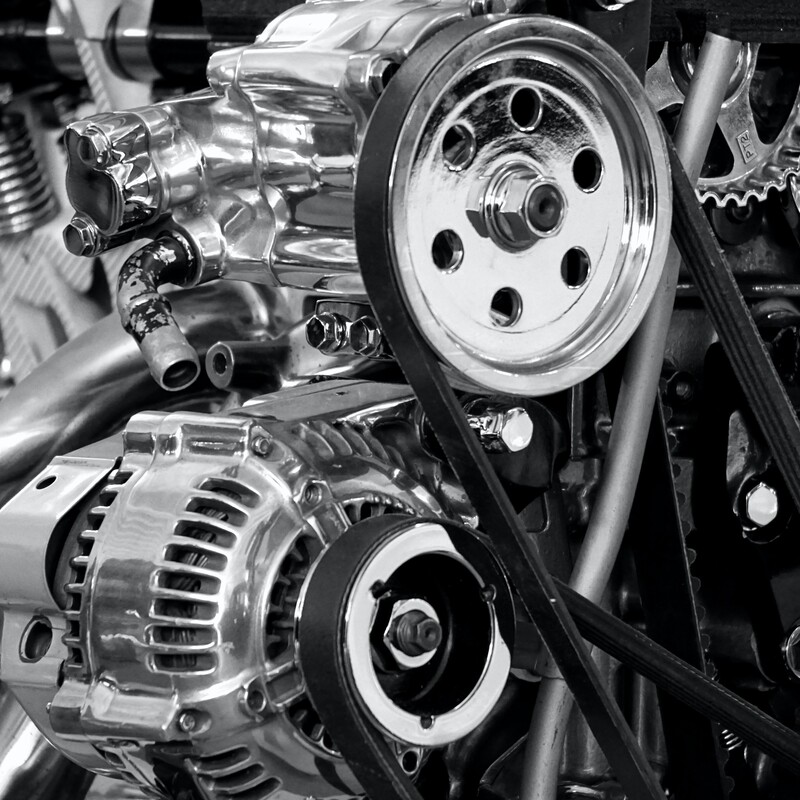
Manufacturing and industrial machinery, including conveyor systems, pumps, and gearboxes, rely on C3 bearings to ensure smooth and efficient operation, even under challenging conditions.

In the aerospace and aviation industries, precision and reliability are paramount. C3 bearings are employed in aircraft engines, landing gear, and control systems, where they contribute to safety and performance.
 Further reading:
Radial Bearings: Types, Applications, Advantages, and Maintenance
Motorcycle Wheel Bearings: The Key to Smooth Ridin
Choosing between C3 and standard (CN) clearance mainly comes down to operating temperature rise and how tight your fit is. When the inner ring runs noticeably hotter than the outer ring, or a tighter interference fit compresses the clearance, C3's larger initial clearance helps preserve enough working clearance and avoids excessive preload. For ambient-temperature, low-load conditions, CN is usually enough. Share your speed, load and mounting fit, and ISK Bearings can help assess the right choice.
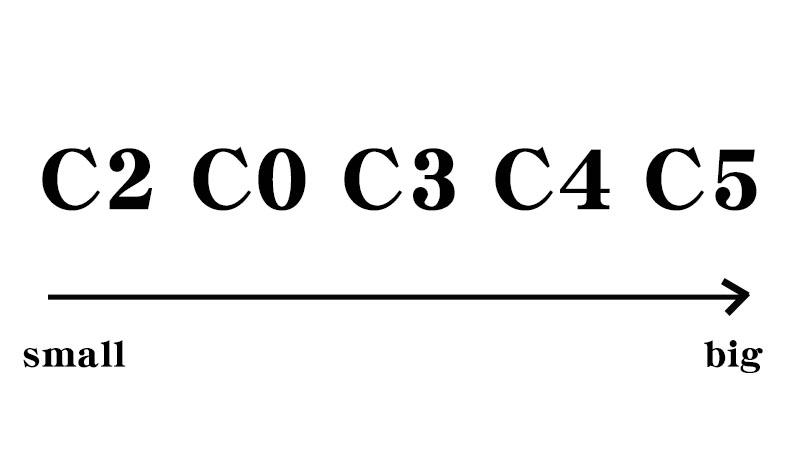
C2, CN, C3, C4 and C5 are radial clearance grades ranked from smallest to largest: CN is standard, C2 is below standard, and C3, C4, C5 are progressively above standard. Larger clearance better accommodates thermal expansion and fit compression, but too much can raise running noise and vibration; smaller clearance gives higher positioning accuracy. The right grade depends on temperature rise, fit and precision needs — share your operating conditions and ISK can help confirm.
Deep groove ball bearings do not always need C3 clearance — whether to move up to C3 depends on the application. For high temperature rise, motor-type high-speed use, or tight fits, C3 preserves suitable working clearance; for ambient-temperature applications with standard fits, standard (CN) clearance is usually sufficient. Simply choosing a larger clearance can actually increase noise. Share the application and speed, and ISK can advise on a suitable clearance grade.
A hot-running bearing does not automatically mean you should switch to C3, because heat has many causes and insufficient clearance is only one of them. Too tight a fit, poor lubrication, overload or misalignment can all raise temperature. If thermal expansion is confirmed to be compressing the working clearance, moving to C3's larger clearance can help — but identify the real cause before changing. ISK can help diagnose the root cause from operating, fit and lubrication data to avoid an ineffective change.
Because C3 bearings have larger initial clearance, they can indeed run slightly noisier or with more vibration than standard-clearance bearings when cold or lightly loaded before reaching operating temperature. This usually improves once the temperature rises and clearance converges to its working value. If the noise stays clearly noticeable, check whether the clearance is too large, the fit is incorrect, or lubrication is at fault. Share your operating speed and mounting conditions, and ISK can assess whether clearance selection is the issue.
The MOQ for C3 bearings varies by type, specification and whether customization is needed — standard and custom parts have different conditions. ISK Bearings mainly serves B2B manufacturers and equipment builders, so please share the model, clearance code, quantity and application. We can then provide a quote and lead-time assessment.
When requesting a quote for C3 bearings, prepare the bearing model or bore/outer diameter, the clearance code, the precision class, and estimated annual usage, along with the application (equipment type, speed, load, operating temperature and mounting fit). The more complete this information, the faster ISK can judge whether the specification fits and provide an accurate quote. Drawings or samples, if available, further help confirm selection.
For C3 bearings needing non-standard clearance, special materials or secondary machining, ISK can assess customization feasibility. ISK Bearings manufactures bearings in-house and integrates long-term machining partners, handling clearance adjustment, material selection and downstream processing within a single coordinated flow. Share your drawing, operating conditions and quantity, and we can help evaluate the development direction and delivery approach.
If you already have a bearing model, clearance code, drawing or sample, share your application background and quantity, and ISK will help confirm the specification and provide a quote.
Please provide your question. We’ll find you with the best support options.